





What's Happening?
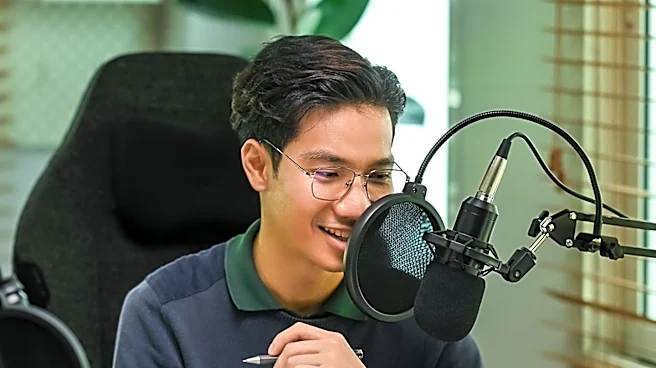
A growing trend in the audiobook industry sees authors taking on the role of narrator for their own works, extending beyond memoirs to include fiction and narrative nonfiction. While writing and narrating are distinct skills, some authors are successfully
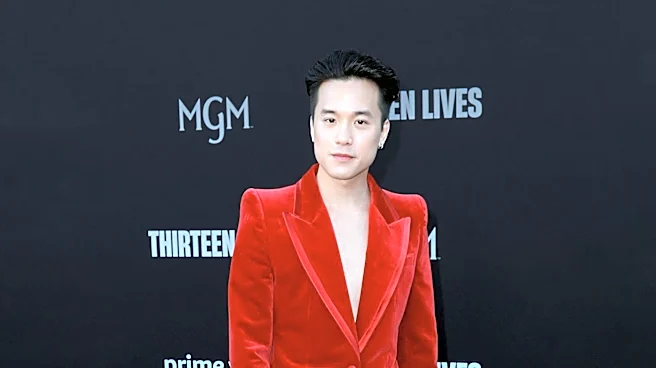
leveraging their deep understanding of their material and characters to create compelling audiobook experiences. Examples include Jon Lindstrom, who not only writes but also performs his noir thrillers like 'Hollywood Payback,' and Eddie Huang, known for narrating his memoirs 'Fresh Off the Boat' and 'Double Cup Love,' who now narrates his novel 'Come Undone.' Ruth Ozeki, an Earphones Award winner for her narration of 'A Tale for the Time Being,' continues to narrate a majority of her new collection, 'The Typing Lady: And Other Fictions.' This shift highlights a desire for authenticity and a deeper connection between the author's intent and the listener's experience.
Why It's Important?
This trend is significant for the U.S. publishing and entertainment industries as it redefines the role of an author in the digital age. For authors, it offers greater creative control over the presentation of their work and potentially new revenue streams. For publishers, it can be a cost-effective strategy, eliminating the need to hire external narrators, while also providing a unique selling point for audiobooks. Listeners benefit from an intimate and authentic experience, as the author's voice can convey nuances and intentions that might be missed by a third-party narrator. This can lead to increased engagement and a stronger connection to the story. However, it also raises questions about the necessary skill sets for authors, as not all writers possess the vocal talent or performance training required for professional narration. The success of this trend could influence how authors are trained and supported in the future, potentially leading to more integrated writing and performance workshops.
What's Next?
The continued success of author-narrated audiobooks is likely to encourage more authors to explore this avenue. Publishers may begin to actively seek out authors with strong vocal presence and performance skills, or invest in training programs to help authors develop these capabilities. This could lead to a new standard in audiobook production where the author's voice becomes a more integral part of the book's identity. We might also see a rise in hybrid roles, where authors collaborate with professional narrators, perhaps narrating specific sections or providing guidance on character voices and tone. The industry will likely monitor listener reception and sales figures to determine the long-term viability and growth potential of this trend, potentially influencing future contract negotiations and marketing strategies for audiobooks.
Beyond the Headlines
Beyond the immediate commercial implications, this trend touches upon the evolving nature of storytelling and authorship. In an increasingly multimedia-driven world, the author's role is expanding beyond simply writing text. By narrating their own works, authors are becoming performers, directly engaging with their audience through sound. This blurs the lines between literature, performance art, and personal branding. It also raises ethical considerations regarding authenticity; while an author's narration can be deeply personal, it also presents a curated version of their voice and interpretation. This shift could foster a deeper appreciation for the craft of oral storytelling and the unique power of the human voice in conveying emotion and meaning, potentially influencing other forms of media and content creation.