









What's Happening?
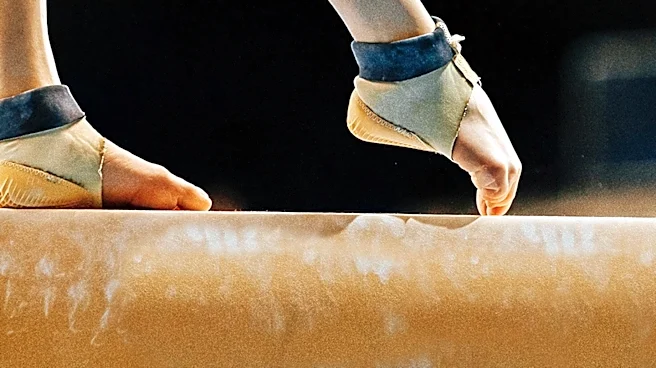
Nadia Comaneci, a 14-year-old Romanian gymnast, made history at the 1976 Montreal Olympics by becoming the first gymnast to score a perfect 10.0 in Olympic competition. Her flawless performances on the asymmetric bars, beam, and floor exercises captivated
audiences and judges alike, earning her multiple perfect scores throughout the Games. Comaneci's achievements overshadowed the Soviet Union's victory in the women's gymnastics team competition, marking a significant moment in Olympic history. Her precision and grace set a new standard in gymnastics, as she completed complex routines with apparent ease and minimal errors.
Why It's Important?
Comaneci's groundbreaking performances at the 1976 Olympics had a profound impact on the sport of gymnastics, raising the bar for future competitors. Her perfect scores challenged the existing judging standards and inspired a new generation of gymnasts to strive for excellence. The event also highlighted the increasing competitiveness of Eastern European athletes in international sports, particularly in gymnastics, which had been dominated by the Soviet Union. Comaneci's success brought attention to the rigorous training and discipline of Romanian gymnasts, influencing coaching techniques and athletic programs worldwide.
What's Next?
Following her historic achievements, Comaneci continued to compete and win medals, further solidifying her legacy in gymnastics. Her performances at the Montreal Olympics set a precedent for future competitions, prompting changes in scoring systems to accommodate the evolving complexity of gymnastic routines. The attention garnered by Comaneci's success also led to increased interest and investment in gymnastics programs globally, as countries sought to develop athletes capable of competing at the highest levels.
Beyond the Headlines
Comaneci's achievements transcended sports, becoming a symbol of excellence and perseverance. Her story inspired countless young athletes, particularly girls, to pursue gymnastics and other sports, challenging gender norms and expanding opportunities for women in athletics. The cultural impact of her performances contributed to a broader appreciation of gymnastics as an art form, emphasizing the importance of grace and precision alongside athletic prowess.