







What's Happening?
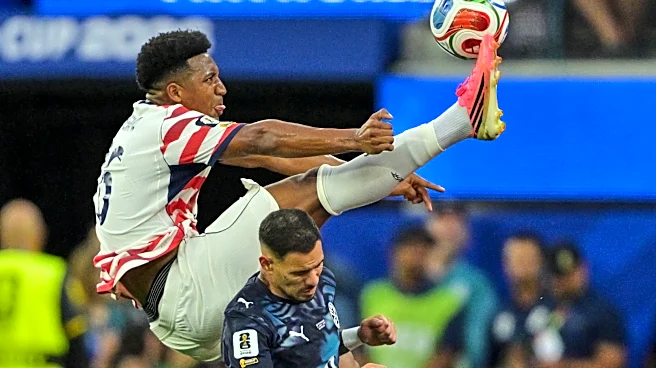
The 2026 World Cup is underway, hosted by the United States, Canada, and Mexico. This tournament marks a significant expansion, featuring 48 teams divided into 12 groups. The United States, as a host nation, automatically qualified and is placed in Group
D, starting its campaign against Paraguay at SoFi Stadium in Inglewood, California. Canada and Mexico are also participating as host nations, with Canada in Group B and Mexico in Group A. The tournament format includes a group stage followed by a knockout round, with 32 teams advancing from the group stage. FIFA has introduced new pathways to ensure competitive balance, preventing the highest-ranked teams from meeting before the semifinals. The tournament will run from June 11 to July 19, with matches held across various venues in the host countries.
Why It's Important?
The 2026 World Cup is significant for several reasons. It is the first time the tournament is hosted by three countries, showcasing North America's ability to organize large-scale international events. The expanded format allows more teams to participate, increasing global representation and competition. This event is expected to boost tourism and economic activity in the host countries, with millions of fans attending matches and engaging in related activities. The tournament also provides an opportunity for the United States to strengthen its position in international soccer, potentially increasing interest and investment in the sport domestically. Additionally, the new format and pathways introduced by FIFA aim to enhance the competitive nature of the tournament, ensuring that top teams have a fair chance to reach the final stages.
What's Next?
As the tournament progresses, teams will compete in the group stage to secure a spot in the knockout round. The top two teams from each group, along with the eight best third-place teams, will advance. The knockout round will determine the final contenders for the championship. Host countries will continue to manage logistics and security to ensure a smooth event. Fans and stakeholders will closely watch the performance of the host nations, particularly the United States, as they aim to make a significant impact on the global stage. The tournament's success could influence future decisions regarding the hosting and format of international soccer events.