





What's Happening?
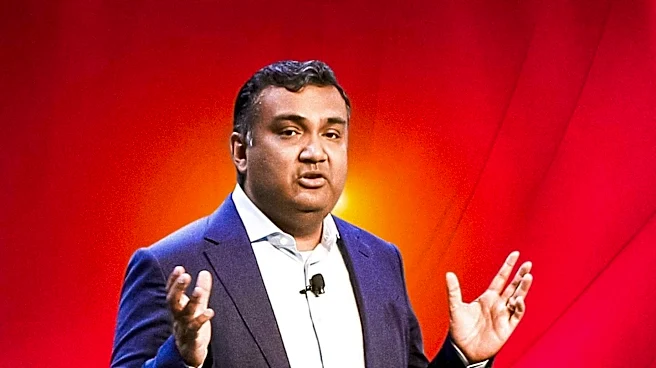
Nikesh Arora, Chairman and CEO of Palo Alto Networks, recently engaged in a one-on-one discussion with Jim Cramer on 'Mad Money.' The conversation covered Palo Alto Networks' quarterly results, the current state of the cybersecurity industry, and the implications
of artificial intelligence (AI) in this domain. Arora emphasized that existing cybersecurity infrastructure, particularly systems deployed seven to ten years ago, is not adequately equipped to handle the challenges posed by modern AI. This highlights a significant gap between current security capabilities and the rapidly evolving threat landscape influenced by AI. The discussion underscored the urgent need for advancements in cybersecurity solutions to counteract the potential weaponization of AI and protect digital assets effectively.
Why It's Important?
This discussion between Nikesh Arora and Jim Cramer is highly significant for the U.S. technology and business sectors, particularly concerning national security and economic stability. Arora's assertion that older cybersecurity systems are ill-prepared for AI-driven threats points to a critical vulnerability across various U.S. industries, from finance to critical infrastructure. The 'weaponization of AI' implies that malicious actors can leverage advanced AI capabilities to launch more sophisticated and evasive cyberattacks, potentially leading to data breaches, operational disruptions, and significant economic losses. Companies that fail to upgrade their cybersecurity defenses risk becoming targets, which could impact their financial performance, consumer trust, and compliance with regulatory standards. This situation creates both a challenge for businesses to invest in new security technologies and an opportunity for cybersecurity firms like Palo Alto Networks to innovate and provide essential solutions, influencing the broader U.S. tech market and national security posture.
What's Next?
Following Nikesh Arora's remarks, the cybersecurity industry is likely to see an accelerated focus on developing and implementing AI-ready security solutions. Businesses and government agencies will face increased pressure to audit and upgrade their existing cybersecurity infrastructures to cope with AI-driven threats. This could lead to higher demand for advanced threat detection, AI-powered security analytics, and automated response systems. Cybersecurity companies will likely invest more in research and development to integrate AI into their offerings, creating new product lines and services. Furthermore, there may be a push for greater collaboration between industry leaders, academic institutions, and government bodies to establish best practices and regulatory frameworks for AI in cybersecurity, aiming to mitigate risks associated with its weaponization and ensure a more resilient digital environment.
Beyond the Headlines
The conversation between Nikesh Arora and Jim Cramer touches upon a profound ethical and societal challenge: the dual-use nature of artificial intelligence. While AI offers immense potential for innovation and efficiency, its 'weaponization' in cybersecurity highlights the darker side of technological advancement. This raises critical questions about responsible AI development, the need for robust ethical guidelines, and international cooperation to prevent AI from becoming a tool for widespread digital warfare. The rapid obsolescence of older cybersecurity systems in the face of AI also points to a broader societal issue of technological debt, where past investments in technology quickly become inadequate. This dynamic necessitates continuous investment in cutting-edge solutions and a proactive approach to digital defense, shaping not only the tech industry but also national security strategies and the very fabric of digital trust in an increasingly interconnected world.