







What's Happening?
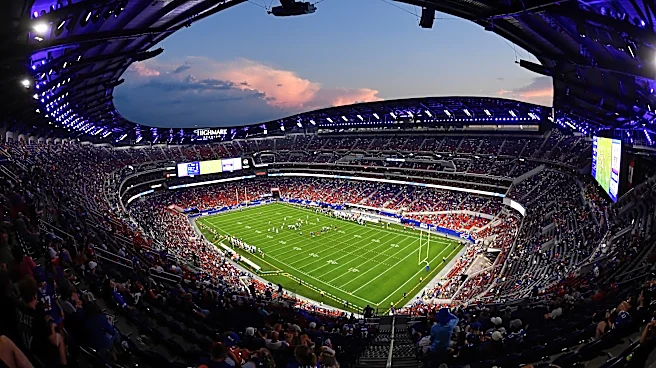
The Buffalo Bills have decided to build a new outdoor stadium, diverging from the trend of enclosed venues in the NFL. This decision comes despite the cold-weather challenges in Buffalo, New York. The new stadium will feature a natural grass field and
incorporate advanced technology to meet the NFL's safety standards. Notably, the stadium will have a canopy covering 64% of the seats to shield fans from adverse weather conditions. It will also include the world's largest snowmelt system, equipped with sensors to detect moisture and heaters to melt snow, which is then transported outside via pipes. This innovative approach aims to enhance the fan experience while maintaining the traditional outdoor football atmosphere.
Why It's Important?
The decision to build an outdoor stadium in Buffalo is significant for several reasons. It reflects a commitment to preserving the traditional football experience, which is valued by many fans. The use of advanced weather technology demonstrates how teams can adapt to environmental challenges while prioritizing fan comfort and safety. Economically, the outdoor stadium could attract a variety of events beyond football, potentially boosting local revenue. The choice also highlights a departure from the economic model of indoor stadiums, which are often designed to maximize revenue through year-round events and high-end hospitality. This move could influence future stadium projects in similar climates.
What's Next?
As the Buffalo Bills proceed with the construction of their new stadium, attention will focus on the implementation of the advanced weather technologies and their effectiveness in enhancing the fan experience. The project will likely involve collaboration with architectural firms and technology providers to ensure the stadium meets both aesthetic and functional goals. The success of this outdoor venue could set a precedent for other teams in cold-weather regions considering similar projects. Additionally, the economic impact of the stadium on the local community will be closely monitored, particularly in terms of job creation and increased tourism.