







What's Happening?
AT&T and AST SpaceMobile have successfully completed what they describe as the industry's first seamless handoff between a ground-based cellular network and a direct-to-device (D2D) satellite network. This milestone, achieved outside Granite Falls, Washington,
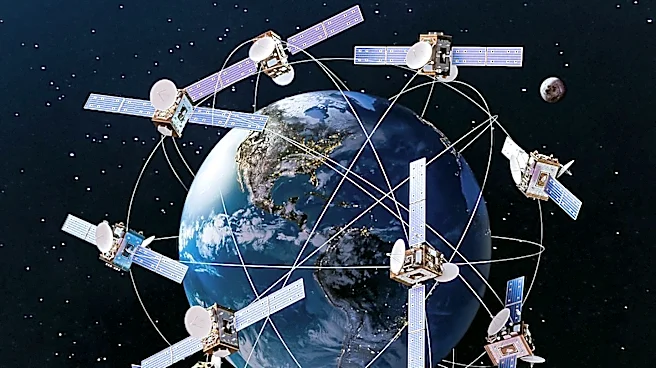
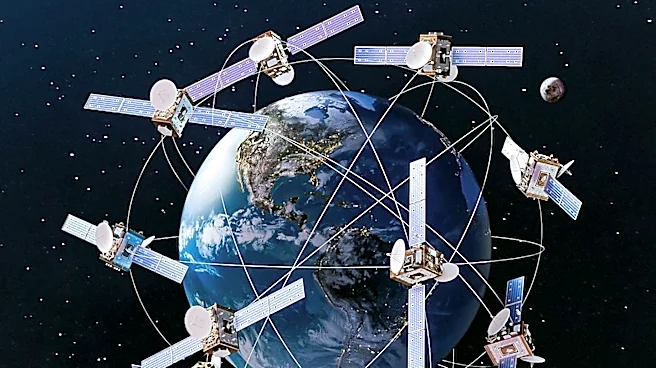
involved a smartphone connected to AT&T's terrestrial network transitioning to AST SpaceMobile's BlueBird satellite network and then back, without interrupting service. The demonstration utilized everyday smartphones, AT&T's network, AST SpaceMobile's satellites, and ground technology from Ericsson and Nokia. This test builds upon previous demonstrations of voice, text, and video calls conducted through the BlueBird satellites. Rakuten Mobile, AST SpaceMobile's partner in Japan, is also targeting commercial D2D service in the near future, though initial service will be limited due to the current number of satellites in orbit. The companies aim to integrate their cellular networks with AST SpaceMobile's satellites to provide continuous mobile broadband service in areas beyond traditional terrestrial coverage.
Why It's Important?
This successful handoff is a significant step towards expanding mobile broadband connectivity to remote and underserved areas in the U.S. and globally. Unlike existing D2D satellite offerings, which often require a new connection to be established when moving between cellular and satellite coverage, AST SpaceMobile's technology aims for seamless transitions, crucial for maintaining continuous communication like video calls. For AT&T, this partnership allows them to complement their existing fiber and wireless infrastructure, extending service to 'not-spots' where traditional cellular towers are not feasible. This development could open up new revenue streams for mobile network operators by enabling them to offer connectivity in previously unreachable locations, benefiting industries such as agriculture, logistics, and emergency services. The ability to use standard smartphones for satellite connectivity also removes the need for specialized, expensive equipment, making the service more accessible to a broader consumer base.
What's Next?
Following this technical milestone, AT&T and AST SpaceMobile plan to enter a beta phase to refine performance under real-world conditions before launching commercial services. While no specific dates have been provided for either step, the beta phase is designed to gather more comprehensive data and ensure the reliability of the service across various scenarios. AST SpaceMobile anticipates having 45 satellites in orbit by early 2027, which is the number required for continuous U.S. coverage. The company currently has 13 satellites in orbit. Continued regulatory approvals and the negotiation of definitive agreements with mobile network operators will be critical for the widespread deployment and commercial success of this technology. The company will also host a business update call near year-end to discuss progress on satellite production, launch status, commercial agreements, and spectrum advancements.
Beyond the Headlines
The seamless cellular-to-satellite handoff represents a fundamental shift in how mobile connectivity can be delivered, potentially blurring the lines between terrestrial and space-based networks. This advancement could have profound implications for disaster relief efforts, enabling communication in areas where ground infrastructure has been compromised. It also raises questions about the future of universal connectivity and digital inclusion, as remote communities could gain access to broadband services previously unavailable. The competition in the D2D satellite market, with players like Starlink and Amazon Leo, suggests a rapidly evolving landscape where innovation in network integration and satellite deployment will be key differentiators. The emphasis on using ordinary smartphones also highlights a trend towards making advanced satellite technology more user-friendly and integrated into daily life, potentially leading to new applications and services that leverage ubiquitous connectivity.