




What's Happening?
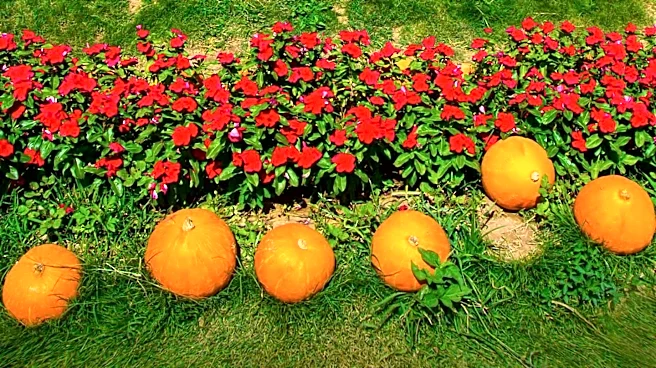
Pumpkin patches in the Portland, Oregon metropolitan area are experiencing their busiest season, with farms like The Frog Pond Farm and The Pumpkin Patch attracting tens of thousands of visitors. The Frog Pond Farm, located about 30 minutes south of Portland in Wilsonville,
estimates 20,000 to 30,000 visitors from September through November, drawing people from as far as Coos Bay and Tacoma, Washington. This farm distinguishes itself with free-roaming llamas among the pumpkin rows. The Pumpkin Patch on Sauvie Island, one of the oldest family-run farms, offers free admission to its sunflower fields and animal barns, aiming to be an affordable option for families. Both farms are preparing for a significant influx of visitors, with The Pumpkin Patch expecting up to 10,000 people daily in mid-October. These farms also serve as educational opportunities, with The Frog Pond Farm hiring a dozen teenagers for the fall season, providing them with their first job experiences.
Why It's Important?
The booming pumpkin patch season in Oregon highlights a significant trend in agritourism, providing economic benefits to local farms and communities. The high visitor numbers, ranging from 20,000 to 30,000 at The Frog Pond Farm alone, demonstrate a strong demand for family-friendly, outdoor activities. This influx of tourism supports local agricultural businesses, helping them to thrive and sustain operations. The focus on affordability, as seen with The Pumpkin Patch's free admission and $15 pumpkin price cap, makes these attractions accessible to a wider demographic, reinforcing their role as community hubs. Furthermore, these farms contribute to local employment, particularly for teenagers, offering valuable first job experiences and fostering a connection between younger generations and agricultural practices. The unique attractions, such as free-roaming llamas, also showcase innovative approaches to draw visitors and enhance the overall experience, setting a precedent for other agritourism ventures.
What's Next?
As the pumpkin patch season continues through November, farms in the Portland metro area will likely continue to manage high visitor volumes, potentially leading to increased traffic congestion, especially around popular locations like The Pumpkin Patch on Sauvie Island. The success of this season may encourage other farms to expand their agritourism offerings or introduce unique attractions to compete in the market. The employment of teenagers for seasonal work is expected to continue, providing ongoing job opportunities and skill development for local youth. Farms will also likely continue their efforts to market themselves as affordable and family-friendly destinations, potentially leading to more comprehensive lists and guides from local publications like PDX Parent. The sustained popularity of these events could also prompt discussions about infrastructure improvements to handle increased visitor traffic and ensure continued accessibility for all families.
Beyond the Headlines
The popularity of pumpkin patches extends beyond simple seasonal entertainment, reflecting a deeper societal desire for nostalgic, community-oriented experiences and a connection to agricultural roots. In an increasingly urbanized society, these farms offer a vital opportunity for families, particularly children, to engage with nature, animals, and the origins of their food. This trend underscores the value placed on authentic, hands-on experiences that contrast with digital entertainment. The educational aspect, where children learn about farm life and teenagers gain work experience, contributes to community development and fosters a sense of responsibility. The emphasis on affordability also highlights a broader need for accessible recreational activities that cater to diverse economic backgrounds, reinforcing the idea that such experiences should be inclusive. This phenomenon suggests a cultural shift towards valuing local, sustainable, and experiential forms of recreation.