




What's Happening?
Keel Infrastructure, previously known as Bitcoin mining company Bitfarms, is undergoing a complete transformation, shifting its focus from cryptocurrency mining to becoming a pure energy infrastructure provider for Artificial Intelligence (AI) and high-performance
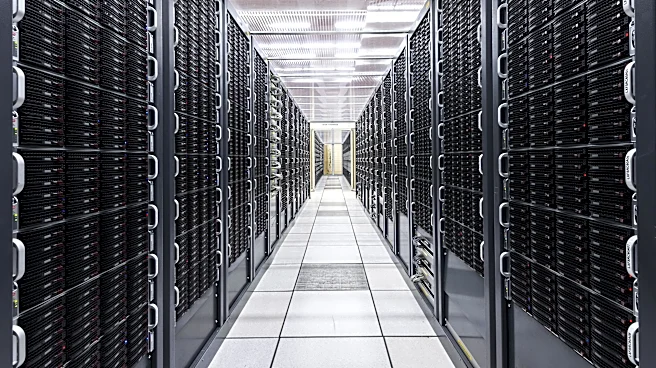
computing. This strategic pivot, spearheaded by CEO Ben Gagnon, involves repurposing existing Bitcoin mining facilities and their substantial power supplies into AI data centers. The company, which recently changed its domicile from Canada to the U.S. on April 1, 2026, aims to address the critical power constraint in the burgeoning AI industry. This move follows a trend among several Bitcoin miners, including Core Scientific, Riot Platforms, and Hut 8, who are either fully transitioning or adopting hybrid models to leverage their energy assets for AI. Gagnon's vision for Keel Infrastructure is to capitalize on the high demand for power in AI operations, which offers significantly greater revenue potential compared to Bitcoin mining. The company is focusing on developing 'powered shells' for AI compute providers, supplying the necessary infrastructure and power without directly investing in expensive GPUs.
Why It's Important?
This strategic shift by Keel Infrastructure highlights a significant trend in the energy and technology sectors, where existing infrastructure developed for Bitcoin mining is being repurposed for AI data centers. The move underscores the increasing recognition that power supply is a critical bottleneck for AI development and expansion. Companies like Keel, with established access to large-scale power, are uniquely positioned to meet this demand. This transition could lead to a more efficient utilization of energy resources and existing industrial sites, particularly in regions with abundant and affordable power. For the U.S. economy, this could mean a boost in AI infrastructure development, attracting more investment and fostering innovation in the technology sector. It also signals a potential revaluation of assets for companies that previously focused solely on cryptocurrency mining, as their energy infrastructure becomes a valuable commodity in the AI gold rush. The shift could also impact local economies in areas where these data centers are established, creating new jobs and driving economic activity.
What's Next?
Keel Infrastructure is currently focused on securing environmental permits and signing leases for its three priority projects: Panther Creek and Sharon in Pennsylvania, and a hydro project in Moses Lake, Washington. While the company initially aimed to secure leases by the end of 2026, delays have pushed back this timeline. The biggest challenge for Keel is not attracting customers, but rather obtaining the final environmental permits, which are crucial for project commencement. The company has raised significant capital through convertible debt and by selling its Bitcoin holdings to fund this transition. However, with minimal current revenues as it exits Bitcoin mining and has yet to generate income from AI, Keel faces a period of cash burn. The success of its pivot hinges on its ability to rapidly secure permits and finalize customer agreements for its AI data center sites. The market will be closely watching for updates on these projects and the company's ability to execute its ambitious transformation plan.
Beyond the Headlines
The transformation of Bitcoin mining companies into AI infrastructure providers like Keel Infrastructure represents a broader economic and technological evolution. It highlights the dynamic nature of capital allocation in response to emerging technological needs. The shift from a volatile, energy-intensive cryptocurrency operation to a stable, high-demand AI infrastructure business reflects a maturation of the digital economy. This pivot also brings into focus the critical role of energy policy and infrastructure planning in supporting advanced technological development. As AI continues to grow, the demand for reliable and scalable power will intensify, potentially leading to increased investment in renewable energy sources and grid modernization. Furthermore, the repurposing of former industrial sites, such as those previously used for waste coal burning and then Bitcoin mining, into AI data centers, showcases a potential pathway for economic revitalization in certain regions, transforming legacy industries into hubs for future technologies. This also raises questions about the environmental impact of large-scale AI data centers and the need for sustainable energy solutions.