






What's Happening?
Spirit AeroSystems, a wholly owned subsidiary of The Boeing Company, is actively seeking a Tool Engineer Manager for its Commercial Business Units in Wichita, Kansas. This role is crucial for the design and support of airplane manufacturing tools, including
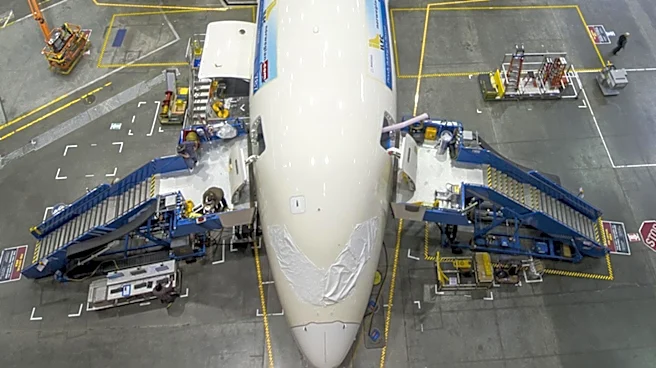
access equipment, handling and transportation systems, test equipment, gauges, assembly jigs, and drill equipment. The manager will apply engineering principles to develop designs, analyze structural, electrical, and mechanical systems, and ensure compliance with company and governmental policies. Key responsibilities include identifying and implementing advanced technologies to improve manufacturing processes, resolving fabrication concerns, conducting trade and cost studies, and integrating production activities. The position requires a Bachelor's degree in engineering and at least five years of relevant experience as a Tool Engineer Manager, Supervisor, or Team Lead in a highly-regulated manufacturing environment. Preferred qualifications include over 10 years of experience in aviation or aeronautics manufacturing, expertise in CAD systems (CATIA preferred), and a proven track record in leading process improvement and product optimization strategies. The salary range for this position is between $119,050 and $182,500, with eligible Kansas team members potentially receiving a $5,000 state aviation tax credit for up to five years.
Why It's Important?
The recruitment of a Tool Engineer Manager by Spirit AeroSystems is vital for maintaining and advancing the efficiency and precision of aerospace manufacturing. This role directly impacts the production of critical commercial aerostructures for Boeing, ensuring that the tools used in fabrication and assembly meet stringent engineering and quality standards. A skilled manager in this position can drive innovation in manufacturing processes, reduce costs through optimized tool design, and enhance overall production efficiency, which is crucial for meeting delivery schedules and maintaining competitiveness in the global aerospace market. The emphasis on advanced technologies and process improvement highlights the industry's continuous drive for innovation and operational excellence. Furthermore, the competitive salary and state tax credit offered underscore the value placed on specialized engineering talent in Kansas, contributing to the economic growth and technological advancement of the region's aerospace sector.
What's Next?
Spirit AeroSystems will proceed with the selection and hiring of a qualified Tool Engineer Manager to lead its tool engineering initiatives in Wichita. The successful candidate will be tasked with overseeing the design, development, and implementation of manufacturing tools, directly influencing the production capabilities for commercial aerostructures. This hire is expected to contribute to ongoing efforts to optimize manufacturing processes, integrate new technologies, and ensure the highest standards of quality and efficiency. The company will likely continue to invest in advanced engineering talent and technologies to support its long-term production goals and maintain its position as a key supplier to Boeing. Future developments may include further enhancements in tool design methodologies and the adoption of more sophisticated CAD/CAM systems to streamline production workflows.
Beyond the Headlines
The search for a Tool Engineer Manager at Spirit AeroSystems reflects the intricate and highly specialized nature of aerospace manufacturing. Tool engineering is a foundational discipline that underpins the entire production process, from initial design to final assembly. The requirement for extensive experience with CAD systems like CATIA points to the industry's reliance on advanced digital design and manufacturing tools, which are essential for precision, repeatability, and complex geometries. This role also highlights the critical intersection of engineering principles, manufacturing processes, and quality assurance in a safety-critical industry. The continuous pursuit of process improvement and product optimization strategies by companies like Spirit AeroSystems demonstrates a commitment to lean manufacturing principles and operational excellence, which are key drivers of competitiveness and sustainability in the global aerospace sector. The state's tax credit further illustrates how regional economic policies can support and incentivize the growth of high-value manufacturing jobs.