





What's Happening?
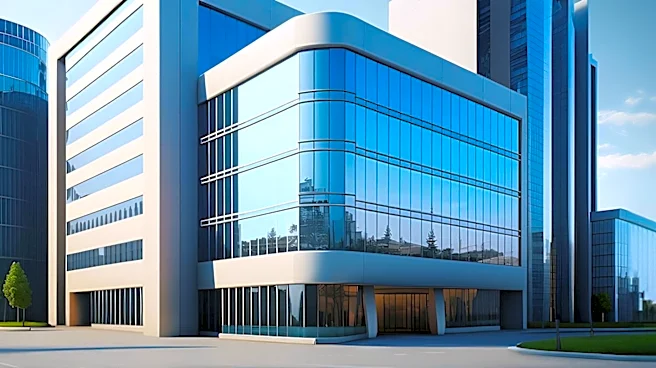
CHOMEX (Container Home X), a U.S. provider of prefabricated modular buildings, is increasing its focus on the commercial office market. This strategic shift comes in response to growing customer demand for portable office buildings, mobile offices, and alternatives
to traditional office trailers and container offices. While CHOMEX initially concentrated on residential buildings, individual customer requests for commercial applications have evolved into a significant market segment. The company has already deployed commercial offices in Arizona, Texas, Colorado, Nevada, and California, gaining experience across diverse regions and business needs. CHOMEX buildings are designed to be transported in a compact form and then expanded on-site to create wider usable interiors. These structures can be configured as finished commercial workspaces, including private offices, open-plan areas, reception areas, meeting rooms, kitchens, and restrooms, offering a flexible solution for businesses needing additional workspace without traditional construction. CEO Shia Halpern noted that the market opportunity was too substantial to ignore, prompting the company to respond to this demand.
Why It's Important?
This expansion by CHOMEX is important for the U.S. business landscape as it addresses a growing need for flexible and rapidly deployable workspace solutions. Many businesses, particularly those in construction, remote operations, or those requiring temporary facilities, often rely on traditional office trailers or shipping containers. CHOMEX's approach offers a more substantial and customizable alternative, potentially improving working conditions and operational efficiency in these sectors. The ability to configure buildings with various layouts, from individual offices to larger multi-unit facilities, provides businesses with greater adaptability. This trend could lead to a broader adoption of modular construction in commercial settings, impacting the construction industry by offering quicker deployment times and potentially lower costs compared to conventional building methods. It also highlights a shift in how companies are addressing their infrastructure needs, prioritizing speed, flexibility, and customization in their workspace solutions.
What's Next?
CHOMEX plans to continue developing configurations for a wide range of commercial customers, from individual businesses needing a single office to larger organizations requiring multi-unit facilities. The company will maintain its residential product line while allocating additional resources, product development, and marketing efforts towards portable offices and other commercial applications. This dual focus indicates a strategy of allowing customer demand to guide investment and growth. As CHOMEX increases its presence in the portable office market, it is likely to further refine its offerings to meet specific industry needs, potentially leading to more specialized modular solutions. The company's success could also encourage other modular building providers to expand their commercial offerings, fostering innovation and competition in this growing market segment. The long-term impact could see modular construction becoming a more mainstream solution for various commercial and institutional applications across the U.S.
Beyond the Headlines
The shift by CHOMEX towards commercial modular buildings reflects a broader societal and economic trend towards agility and efficiency in infrastructure. In an era where businesses need to adapt quickly to changing market conditions, project demands, or disaster recovery, traditional construction methods can be too slow and costly. Modular solutions offer a way to circumvent these challenges, providing rapid deployment and scalability. This development also touches upon environmental considerations, as modular construction can often be more sustainable due to reduced waste and efficient use of materials. Furthermore, the ability to create more comfortable and functional portable workspaces, as opposed to cramped trailers, could improve employee morale and productivity in temporary or remote settings. This evolution in construction methods could also influence urban planning and land use, offering flexible solutions for temporary community services, pop-up retail, or rapidly expanding industries, thereby contributing to more dynamic and responsive urban and rural development.