









What's Happening?
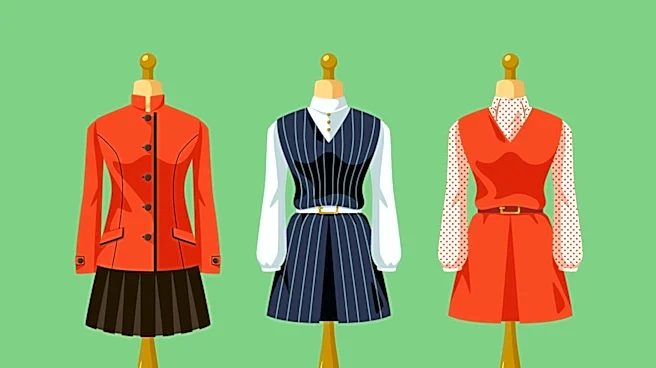
The history of women's clothing sizes is explored, revealing how the fashion industry has evolved from the Civil War era to modern times. Initially, clothing sizes were standardized for military uniforms, which later influenced the ready-to-wear industry.
Over time, the industry has struggled with size inclusivity, often relying on outdated standards like the hourglass figure. Vanity sizing emerged as a marketing strategy, altering size labels to enhance consumer self-perception. Despite efforts to standardize sizes, the industry remains fragmented, with significant variations across brands. This historical overview highlights the challenges of achieving consistent sizing in fashion.
Why It's Important?
Understanding the history of clothing sizes sheds light on the ongoing challenges of size inclusivity in the fashion industry. The reliance on outdated standards and vanity sizing practices has contributed to consumer frustration and body image issues. This exploration emphasizes the need for a more inclusive approach that considers diverse body types. The industry's struggle to reconcile standardized manufacturing with individual anatomy highlights the importance of innovation and adaptation in fashion. Addressing these issues could lead to more equitable and accessible fashion options for all consumers.