




What's Happening?
Nestlé announced plans to increase its purchases of Mexican coffee and maintain prices above international benchmarks, following protests by coffee growers in Mexico. Over 500 farmers protested in Tapachula on November 23, 2026, citing low farmgate prices of 43
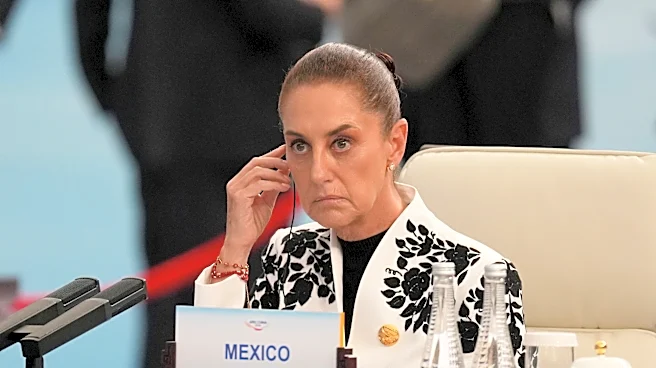
pesos ($2.20) per kilo. Mexico's President Claudia Sheinbaum publicly supported the farmers, urging Nestlé to pay fair prices and buy directly from producers. Nestlé currently purchases coffee through suppliers rather than directly from individual farmers. The company stated that for the 2026–2027 harvest, its prices will remain above international benchmarks, including premiums for quality standards. Nestlé also confirmed it will continue to invest in technical assistance, training, and resources for coffee-growing communities in Mexico.
Why It's Important?
This situation highlights the ongoing tension between large corporations and agricultural producers regarding fair pricing and supply chain practices. The protests and the Mexican President's intervention underscore the significant economic and social impact of coffee prices on local communities. Nestlé's commitment to increase purchases and maintain above-benchmark pricing is crucial for the livelihoods of Mexican coffee growers, potentially stabilizing their income and fostering better relationships within the supply chain. This move could also set a precedent for other multinational corporations operating in agricultural sectors, encouraging more equitable sourcing practices. The emphasis on direct purchasing and price transparency is a key demand from farmers, aiming to reduce the influence of intermediaries.
What's Next?
Nestlé plans to maintain its above-benchmark pricing approach and purchase more Mexican coffee than in the previous year. The company will continue engaging with producers, suppliers, and authorities through ongoing dialogue. Mexico's agriculture ministry, SADER, has been instructed by President Sheinbaum to support coffee farmers in negotiations with Nestlé. While Nestlé has not specified whether it will revise its 2026–2027 rates, it has indicated a commitment to strengthening price transparency across the supply chain. Future developments will likely involve continued discussions between Nestlé, government officials, and farmer representatives to ensure the implemented measures effectively address the growers' concerns and lead to sustainable pricing models.
Beyond the Headlines
The incident brings to light the ethical considerations surrounding global supply chains and corporate responsibility. The call for Nestlé to buy directly from producers rather than through intermediaries reflects a broader movement towards greater transparency and fairness in agricultural trade. This situation could influence consumer perceptions of Nestlé and other large food companies, potentially increasing demand for ethically sourced products. It also highlights the power of collective action by farmers and government support in advocating for better economic conditions. The long-term implications could include a shift towards more direct trade models, increased investment in farmer support programs, and a re-evaluation of pricing structures in the global coffee market to ensure equitable distribution of value.