


What's Happening?
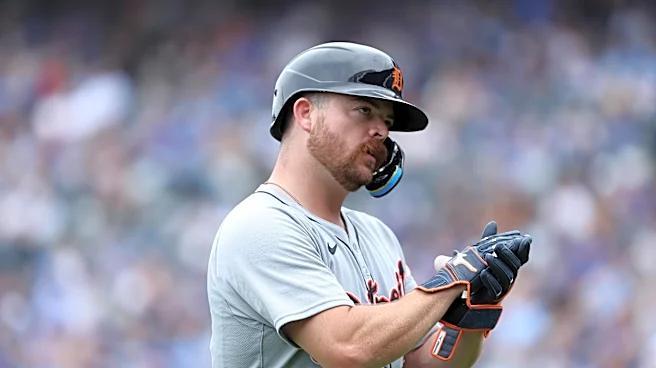
The Detroit Tigers must decide by Friday, November 20, 2026, whether to offer Spencer Torkelson a contract for the 2027 season. If the Tigers do not tender him a contract by the 5 p.m. ET deadline, Torkelson will become a free agent. Torkelson, a former
No. 1 overall draft pick from Arizona State, is currently under contract through 2028. This decision is part of the annual non-tender deadline process in Major League Baseball, where teams evaluate arbitration-eligible players. According to CBS Sports writer Mike Axisa, Torkelson is projected to earn $7.7 million in 2027, with his 2028 arbitration salary expected to be even higher. Axisa's analysis suggests that Torkelson's projected salary may be starting to outweigh his on-field production, leading to speculation that the Tigers might choose not to tender him a contract.
Why It's Important?
This decision holds significant implications for the Detroit Tigers' roster construction and financial strategy. Torkelson's status as a former top draft pick means his future with the team is closely watched by fans and analysts. If the Tigers non-tender him, it would free up a substantial amount of salary, allowing the team to reallocate resources to other players or positions. Conversely, retaining him would mean committing to a significant salary for a player whose production is under scrutiny. The outcome will directly impact the team's plans for first base and designated hitter roles heading into the 2027 season. For fantasy baseball managers, Torkelson's free agency would mean a potential change in team and role, affecting his fantasy value. This situation also highlights the broader trend in MLB where teams increasingly weigh rising arbitration salaries against player performance, even for highly touted prospects.
What's Next?
The Detroit Tigers' decision regarding Spencer Torkelson's 2027 contract will be announced by the 5 p.m. ET deadline on Friday, November 20, 2026. If the Tigers choose not to tender him a contract, Torkelson will immediately become a free agent, able to sign with any MLB club. This would prompt the Tigers to seek alternatives for their first base and designated hitter positions, potentially through free agency or trades. The team's front office will need to assess their internal options, such as Colt Keith, who served as the backup first baseman in 2026, and explore external markets. The decision will set the tone for the Tigers' offseason moves and their strategic direction for the upcoming seasons, influencing how they manage their payroll and player development.
Beyond the Headlines
The situation with Spencer Torkelson underscores the inherent risks and pressures associated with high draft picks in professional sports. Despite being a No. 1 overall selection, Torkelson's career trajectory illustrates how quickly player value can fluctuate based on performance relative to escalating salaries. This scenario reflects a broader shift in how MLB teams manage their rosters, prioritizing cost-efficiency and on-field production over draft pedigree. The decision will also serve as a case study for other teams evaluating their own arbitration-eligible players, particularly those who were once highly touted but whose output has not consistently met expectations. It highlights the business aspect of baseball, where financial considerations often dictate player personnel decisions, even for fan favorites or promising talents.