








What's Happening?
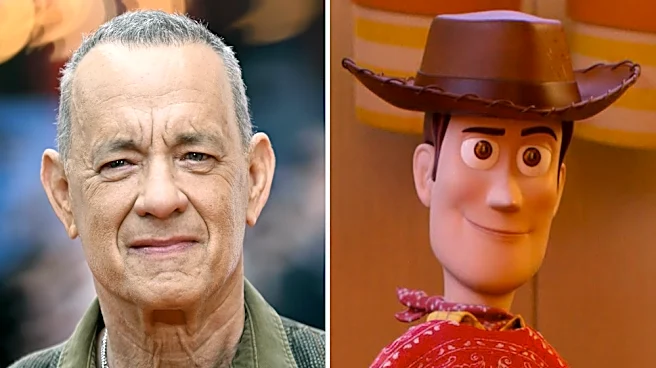
Tom Hanks, who recently reprised his role as Woody in 'Toy Story 5', has expressed concerns about the use of artificial intelligence (AI) to recreate his voice for future installments of the franchise. Hanks acknowledged that Disney could potentially
use AI to generate Woody's voice for 'Toy Story 6' without his involvement, given the extensive library of his recorded dialogue over the past 31 years. He emphasized the importance of ensuring any new 'Toy Story' film is worthwhile and not just a commercial endeavor. Hanks also reflected on the broader implications of AI and deepfake technology in the film industry, noting that it could allow actors' performances to continue posthumously.
Why It's Important?
The potential use of AI to recreate actors' voices raises significant ethical and legal questions within the entertainment industry. It challenges traditional notions of performance and intellectual property, as studios could theoretically continue to use an actor's likeness and voice indefinitely. This development could impact actors' contracts and negotiations, as well as the creative process in filmmaking. The discussion also highlights the growing influence of AI in various sectors, prompting debates about its role and limitations. For audiences, it raises questions about authenticity and the value of human performance in storytelling.
What's Next?
As AI technology continues to advance, the entertainment industry may need to establish new guidelines and regulations regarding its use. This could involve revisiting actors' rights and compensation for the use of their digital likenesses. Studios might also explore the balance between technological innovation and preserving the integrity of human artistry. The conversation initiated by Hanks could lead to broader industry discussions and potential policy changes to address these emerging challenges.