



What's Happening?
Contemporary Amperex Technology Co. Ltd. (CATL) experienced a significant drop in its share prices, with a 12.23% fall in Hong Kong and an 8.3% decline in Shenzhen. This downturn is attributed to several factors, including new provisional safeguards imposed
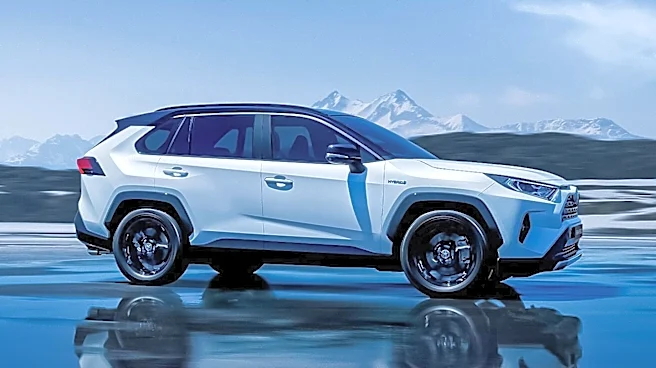
by the European Commission on hybrid passenger vehicle imports from China. These measures, effective December 1, 2026, cap imports at 191,780 units over 200 days, a substantial reduction compared to the over 470,000 units imported in the first eight months of 2026. This creates uncertainty for Chinese vehicle production and its battery suppliers. Additionally, CATL faces increasing competitive pressure from automakers seeking to diversify suppliers and reduce costs, as second-tier battery manufacturers narrow product-performance gaps. Despite reporting a 58.58% year-on-year revenue increase in Q3 and a 14.54% rise in net profit, concerns about future profitability and market share erosion persist among investors.
Why It's Important?
The decline in CATL's share price and the broader battery sector highlights growing anxieties within the electric vehicle (EV) supply chain. The EU's import quotas on Chinese hybrid vehicles signal a potential shift in global trade dynamics, impacting Chinese manufacturers' access to key European markets. This could force Chinese automakers and their suppliers, like CATL, to re-evaluate export strategies and seek alternative markets. For CATL, increased competition means a potential erosion of its market dominance and profitability, as automakers leverage a more competitive landscape to negotiate lower battery prices. The situation also reflects a broader market sentiment of bearishness on demand for EV components, influencing lithium and electrolyte prices. This could lead to a ripple effect across the entire EV ecosystem, from raw material suppliers to vehicle manufacturers, potentially affecting investment decisions and future growth projections in the sector.
What's Next?
The immediate future for CATL and the broader battery sector will likely involve close monitoring of the impact of the EU's import quotas. Chinese automakers may explore redirecting sales to other markets or adjusting production strategies to mitigate the effects of reduced access to the EU. CATL will need to navigate intensified competition by potentially adjusting pricing strategies or further innovating to maintain its market position. The coming quarters will be crucial for assessing the actual impact on CATL's profitability and market share, especially as new LiPF6 capacity comes online, potentially further pressuring material prices. Investors will be keenly watching for CATL's upcoming financial results for further indications of its performance amidst these challenges. The broader market may also see continued volatility in lithium and electrolyte prices as supply and demand dynamics evolve.
Beyond the Headlines
Beyond the immediate financial implications, these developments point to a potential recalibration of global supply chains for electric vehicles. The EU's protectionist measures, while currently focused on hybrids, could signal a broader trend towards regionalization of EV manufacturing and supply, driven by geopolitical considerations and a desire for greater supply chain resilience. This could accelerate the development of local battery production capabilities in Europe and other regions, reducing reliance on Chinese suppliers. For CATL, this necessitates a strategic shift from a global dominance model to one that might involve more localized production or partnerships in key markets. The increased competition also underscores the maturing EV battery market, where technological differentiation and cost efficiency will become even more critical for sustained success, potentially leading to consolidation or strategic alliances within the industry.