





What's Happening?
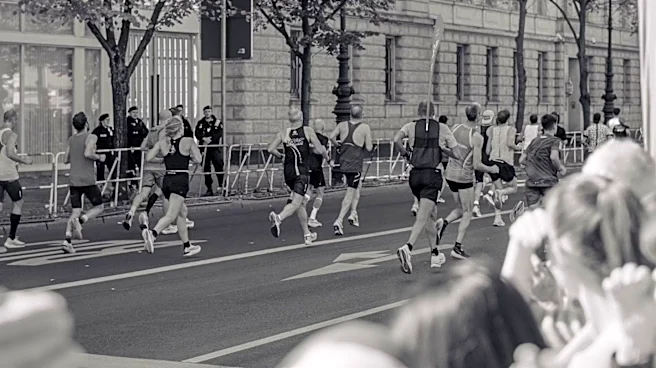
The Twin Cities Marathon is set to return this Sunday, with tens of thousands of participants from every U.S. state and two dozen countries converging in Minneapolis and St. Paul. The event, which is nearly half a century old, has broken participation
records this year, with over 30,000 individuals signed up for various races. The weekend's activities commence with a health and fitness expo at the St. Paul RiverCentre, open Friday from 11 a.m. to 7 p.m. and Saturday from 10 a.m. to 6 p.m. Family-friendly events and 5K and 10K races are scheduled for Saturday. The main marathon race begins at 8 a.m. Sunday in downtown Minneapolis, winding through the city's lakes before concluding at the state Capitol in downtown St. Paul. Last year's winners, Will Norris of Iowa and Jane Bareikis of Illinois and Kenya, are returning to defend their titles, according to MPR News.
Why It's Important?
The Twin Cities Marathon is a significant annual event that brings substantial economic and social benefits to the Minneapolis and St. Paul metropolitan area. With over 30,000 participants and their accompanying spectators, the event generates considerable revenue for local businesses, including hotels, restaurants, and retail establishments. It also enhances the Twin Cities' reputation as a hub for major sporting events, attracting national and international attention. The marathon fosters community engagement, promoting health and fitness among residents and providing a platform for charitable fundraising. The participation of elite athletes like Will Norris and Jane Bareikis elevates the competitive profile of the race, drawing in sports enthusiasts and inspiring local runners. The event's long-standing history and growing participation underscore its importance as a cultural and athletic institution in the region.
What's Next?
The immediate focus is on the successful execution of the marathon weekend, which includes managing road closures and detours in Minneapolis and St. Paul. Participants are advised to carpool and arrive early, while spectators can utilize Twin Cities in Motion’s guide for optimal viewing spots and parking information. Looking ahead, organizers have announced a significant change: starting in 2027, the marathon will be pushed back to mid-October. This adjustment is a direct response to increasingly hot fall weather experienced in previous years, aiming to ensure more comfortable and safer running conditions for participants. This proactive measure reflects a growing awareness of climate patterns and their impact on outdoor events, potentially influencing scheduling decisions for similar large-scale events in other regions.
Beyond the Headlines
The Twin Cities Marathon, beyond its athletic and economic impact, serves as a powerful symbol of community resilience and collective spirit. The event's ability to draw tens of thousands of participants and spectators from diverse backgrounds highlights its role in fostering social cohesion and shared experiences. The decision to shift the marathon to mid-October starting in 2027 due to changing weather patterns subtly underscores the broader implications of climate change on everyday life and event planning. This adaptation reflects a pragmatic response to environmental shifts, suggesting that major public events will increasingly need to consider and adjust to evolving climatic conditions. The marathon also provides a unique opportunity for civic pride, as residents come together to support runners and showcase their cities, reinforcing a sense of local identity and collective achievement.