


What's Happening?
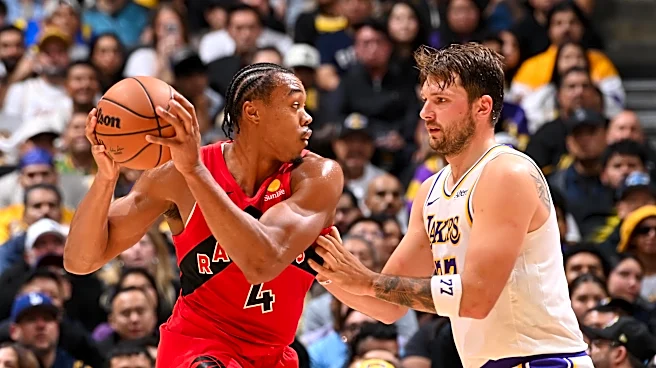
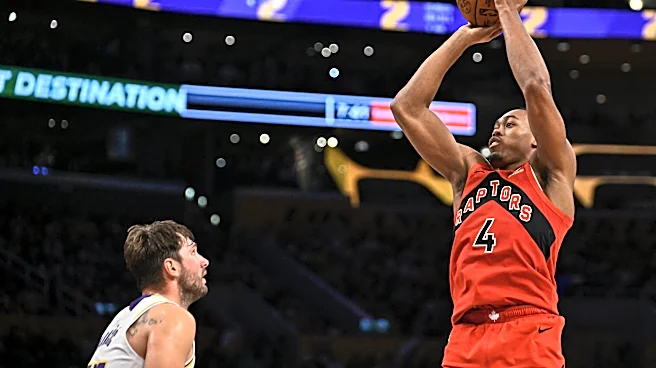
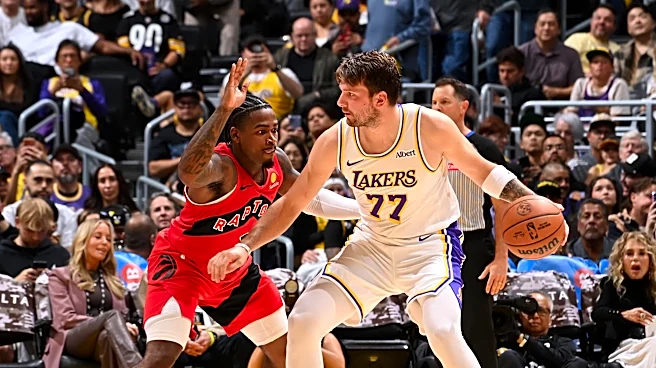
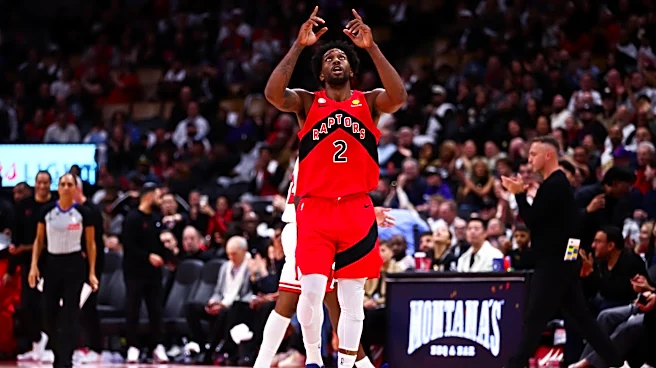
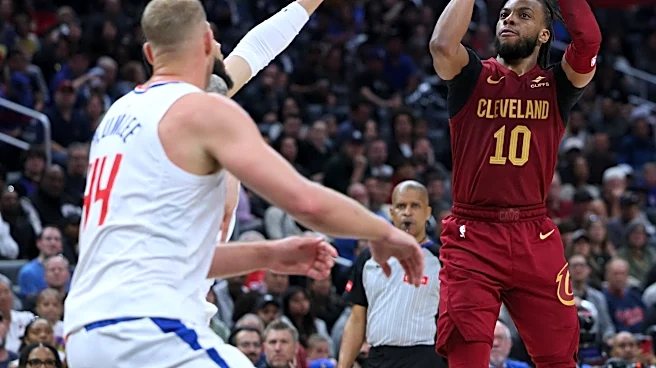
Darius Garland, playing for the Los Angeles Clippers, recorded 16 points, four rebounds, and eight assists in 36 minutes during Monday's 125-118 loss to Toronto. Despite leading his team in assists, Garland faced significant efficiency challenges, committing
seven turnovers and shooting only 35.7 percent from the field (5-14 FG, 1-5 3Pt, 5-6 FT). He also did not register any steals or blocks and finished the game with a team-worst minus-16 rating. This performance highlights a mixed outing where his playmaking was evident, but his overall impact was hampered by turnovers and shooting struggles.
Why It's Important?
Garland's performance is important for the Los Angeles Clippers as it underscores a recurring issue with efficiency and turnovers, which can significantly impact game outcomes. While his ability to distribute the ball and create scoring opportunities (eight assists) is a valuable asset, the high number of turnovers (seven) negates much of that positive contribution. For fantasy basketball players and analysts, these statistics are crucial. The substantial workload and playmaking opportunities Garland receives are generally encouraging for his fantasy production, but his current turnover rate diminishes his overall value. This trend could affect the Clippers' strategic decisions regarding ball-handling responsibilities and Garland's role in critical game situations, potentially influencing team performance and standings.
What's Next?
Following this game, the Los Angeles Clippers and Darius Garland will likely focus on improving his efficiency and reducing turnovers in upcoming matches. The coaching staff may implement strategies to minimize high-risk passes or adjust his role to better balance playmaking with ball security. For Garland, continued high minutes and playmaking opportunities suggest the team still views him as a key facilitator. However, consistent struggles with efficiency could lead to increased scrutiny and potential adjustments in his on-court responsibilities. Future games will be critical in determining if Garland can refine his game to capitalize on his workload without compromising team performance through excessive turnovers.
Beyond the Headlines
Darius Garland's current performance reflects a common challenge for young, high-usage guards in the NBA: balancing aggressive playmaking with efficient decision-making. While his eight assists demonstrate his potential as a primary ball-handler, the seven turnovers point to a need for greater maturity and control in his game. This dynamic is not just about individual statistics but also about team chemistry and offensive flow. High turnover rates can disrupt offensive rhythm, lead to easy points for opponents, and erode team confidence. Addressing these issues requires not only individual skill development but also strategic coaching and potentially a re-evaluation of offensive schemes to better support Garland's strengths while mitigating his weaknesses. The long-term success of both Garland and the Clippers will depend on how effectively these efficiency challenges are resolved.