






What's Happening?
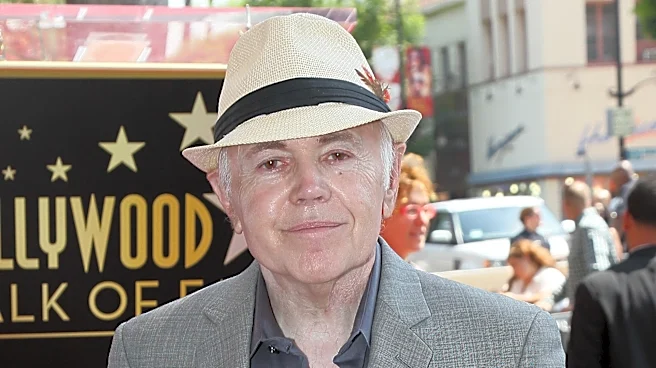
Walter Koenig, who portrayed Chekov in the 'Star Trek' franchise, revealed his satisfaction with having a minimal role in 'Star Trek: The Motion Picture.' In 'The Making of the Trek Films,' Koenig recounted his negative experience with the 1979 film,
stating he was relieved not to be mentioned in the critical reviews. He described the premiere experience, including the red carpet and initial excitement, as quickly fading into disappointment as he watched the movie. Koenig noted that even Gene Roddenberry, the creator of 'Star Trek,' expressed a lukewarm sentiment about the film, which further solidified Koenig's concerns. The film received mixed reviews, with some critics, like Roger Ebert, acknowledging its ambition but noting its shortcomings, while others were harsher, particularly towards the main cast.
Why It's Important?
Walter Koenig's candid reflections on 'Star Trek: The Motion Picture' offer a unique insider perspective on the challenges of adapting a beloved television series to the big screen. His experience highlights the pressure and scrutiny faced by actors and creators when working on high-profile projects with established fanbases. The film's critical reception, and Koenig's personal disappointment, underscore the difficulty of meeting audience expectations and maintaining creative integrity in a major franchise. This event also serves as a historical marker in the 'Star Trek' saga, demonstrating that not all entries in a successful franchise are universally acclaimed. For the entertainment industry, it illustrates the inherent risks in large-scale productions and the potential for even iconic figures to be dissatisfied with the final product, influencing subsequent creative decisions and franchise development.
What's Next?
While 'Star Trek: The Motion Picture' was a critical disappointment for some, its financial success paved the way for future 'Star Trek' films, most notably 'Star Trek II: The Wrath of Khan,' which is widely considered a franchise highlight. Koenig's and Leonard Nimoy's initial reluctance to return after the first film underscores the importance of critical and creative satisfaction for cast members in ensuring the longevity of a series. The lessons learned from the reception of 'The Motion Picture' likely influenced the creative direction of subsequent films, leading to a more character-driven and action-oriented approach that resonated better with audiences and critics. This historical context continues to inform how studios approach the revival and continuation of major franchises, balancing fan expectations with creative vision.
Beyond the Headlines
Koenig's account delves into the psychological impact of critical reception on actors, particularly when their work is part of a cultural phenomenon. His relief at being overlooked by critics, despite being part of a major film, speaks to the vulnerability artists feel when their work is judged publicly. This situation also touches upon the broader theme of artistic compromise versus commercial viability in Hollywood. The initial 'Star Trek' movie, despite its flaws, was a significant commercial venture that kept the franchise alive, demonstrating that box office success can sometimes outweigh critical consensus in the long run. The differing opinions, even among the cast and creator, highlight the subjective nature of art and the complex dynamics within creative teams working on high-stakes projects.