





What's Happening?
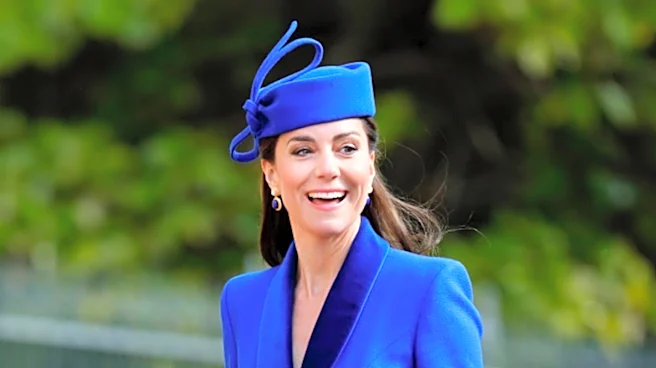
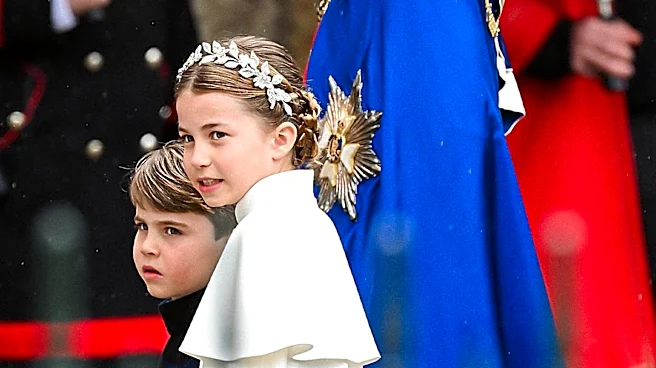
Princess Charlotte, accompanied by her mother Kate Middleton, the Princess of Wales, recently experienced public transport by traveling on London's Elizabeth Line. This outing marked a rare occasion for the young royal, who, along with her siblings, typically
uses private transportation due to security protocols. According to Stephen Long, Director and Head of Strategy at Crossrail International, Kate Middleton expressed her enjoyment of the Elizabeth Line, noting that Princess Charlotte was "really taken" with the experience. The Princess of Wales observed that the line is utilized by a diverse cross-section of society, from commuters to individuals enjoying a night out. This event occurred during the Prince and Princess of Wales's visit to India, where Kate Middleton reportedly shared details of the October outing. The Elizabeth Line, named in honor of Queen Elizabeth, was officially opened in 2022.
Why It's Important?
This seemingly simple act of using public transport carries broader significance for the royal family and public perception. By exposing Princess Charlotte to everyday experiences like tube travel, Kate Middleton is actively fostering a more 'normal' upbringing for her children, a departure from the more insulated lives of previous royal generations. This initiative can help bridge the perceived gap between the monarchy and the general public, making the royals more relatable and accessible. For Princess Charlotte, this experience offers a glimpse into the lives of ordinary citizens, potentially shaping her understanding of society and her future role within it. It also subtly reinforces the royal family's connection to modern Britain, aligning with efforts to present a more contemporary image of the monarchy. The Princess of Wales's own past comments about missing public transport highlight a personal connection to these efforts.
What's Next?
While this was a singular event, it could signal a continued effort by the Prince and Princess of Wales to integrate more 'normal' experiences into their children's lives. Future public transport outings for the young royals, though likely infrequent and carefully managed, could further reinforce this approach. Such actions might also inspire other public figures to engage more directly with everyday life, fostering a sense of shared experience with the populace. The positive reception of this event suggests that the public appreciates these efforts to make the royal family more relatable. Continued engagement with public services and spaces could become a subtle but effective strategy for maintaining public support and relevance for the monarchy in a modern context.
Beyond the Headlines
The decision to have Princess Charlotte use public transport reflects a broader cultural shift within the British monarchy towards greater transparency and relatability. This move can be seen as a strategic effort to ensure the long-term viability and public acceptance of the institution in an increasingly egalitarian society. By demonstrating that even young royals engage with public services, the family subtly challenges traditional perceptions of aristocratic detachment. This approach also has implications for the children's personal development, potentially instilling a greater sense of empathy and understanding of diverse social experiences. It underscores a conscious effort to balance royal tradition with modern values, preparing the next generation for a monarchy that is both symbolic and connected to the lives of its citizens.