







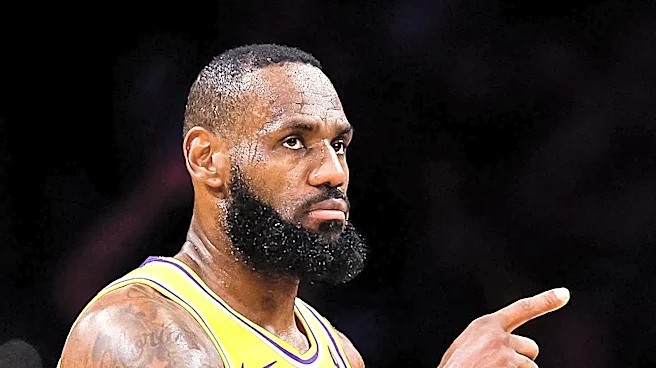


What's Happening?
Jaylen Brown's recent trade from the Boston Celtics to the Philadelphia 76ers has sparked a debate over the role of analytics in NBA team decisions. The trade involved Brown being exchanged for Paul George, along with draft picks. A Western Conference
executive expressed concerns that the NBA might follow Major League Baseball's path, where analytics have heavily influenced game strategies, potentially making the sport less engaging. This sentiment was echoed by an Eastern Conference scout who questioned whether those involved in the league are truly watching the games. Despite Brown's impressive performance, averaging 28.7 points per game and ranking sixth in MVP voting for the 2025-26 season, some in the league remain skeptical of his value, as analytics have not always favored his style of play.
Why It's Important?
The discussion around analytics in the NBA highlights a growing tension between traditional scouting and data-driven decision-making. As teams increasingly rely on analytics, there is concern that the sport could lose its dynamic nature, similar to criticisms faced by baseball. This shift could impact player evaluations, team strategies, and fan engagement. For players like Jaylen Brown, whose contributions may not be fully captured by analytics, this trend could affect their market value and career trajectory. The debate underscores a broader conversation about the balance between innovation and preserving the essence of the game.
What's Next?
The NBA may see further discussions and potential adjustments in how analytics are integrated into team strategies. Teams might need to find a balance between data-driven insights and traditional scouting to maintain the sport's appeal. Players and agents could also become more vocal in advocating for a more holistic evaluation approach that considers both statistical and intangible contributions. The league's response to these concerns could shape future trade negotiations and player assessments.
Beyond the Headlines
The analytics debate in the NBA also raises questions about the cultural and ethical implications of data reliance in sports. As teams prioritize efficiency and performance metrics, there is a risk of undervaluing the human elements that make sports compelling. This shift could influence how young athletes are trained and evaluated, potentially altering the development pathways in basketball. The ongoing dialogue may lead to a reevaluation of how success is defined and measured in professional sports.