






What's Happening?
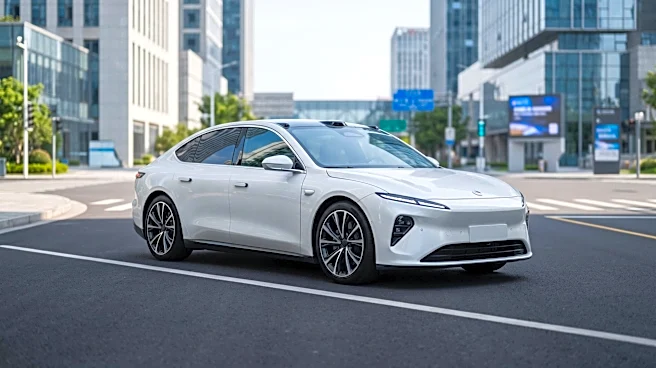
WeRide, a global leader in autonomous driving technology, has achieved its ninth championship title in the China Urban Intelligent Driving Competition. The victory was secured at the Nanchang round by a 2027 AION i60 vehicle equipped with WeRide’s WRD
3.0 one-stage end-to-end Advanced Driver Assistance System (ADAS) solution. This vehicle delivered the only zero-takeover result among all competitors. Additionally, the GAC Trumpchi YUE7, also featuring WRD 3.0, secured second place, marking the first time in the competition's history that two mass-production models from a single provider claimed both first and second place in a final. WeRide's success is attributed to nearly a decade of investment and expertise in Level 4 autonomous driving, leveraging almost 100 million kilometers of real-world testing and operational data. The WRD 3.0 system integrates perception, prediction, planning, and control capabilities validated through extensive Robotaxi operations and is continuously enhanced by WeRide WITT and WeRide GENESIS, the company's proprietary AI cognitive foundation and simulation models.
Why It's Important?
This achievement by WeRide underscores the rapid advancements in autonomous driving technology, particularly in the L2++/L3 segments. For the U.S. market, where autonomous vehicle development is also a significant focus, WeRide's consistent success in competitive environments highlights the global pace of innovation. The company's ability to achieve zero-takeover results and secure top positions with mass-production vehicles demonstrates the increasing reliability and sophistication of ADAS solutions. This could influence U.S. automakers and tech companies to accelerate their own development and deployment strategies to remain competitive. Furthermore, WeRide's existing autonomous driving permits in the U.S. suggest that these advanced capabilities could eventually be integrated into vehicles available to American consumers, potentially enhancing road safety and efficiency. The validation of their technology through rigorous competition and extensive real-world data provides a strong case for the practical application and commercialization of autonomous driving systems.
What's Next?
WeRide plans to continue expanding the deployment of its mass-produced assisted driving solutions globally, aiming to bring its intelligent driving capabilities to more users worldwide. As of Q3 2026, the WRD 3.0 solution has achieved over 100,000 cumulative deliveries and secured 10 additional mass-production design wins, establishing partnerships with multiple automakers. This indicates a clear trajectory towards broader commercialization and integration into consumer vehicles. The ongoing evolution of the WRD 3.0 system, powered by WeRide WITT and WeRide GENESIS, suggests continuous improvements in understanding complex traffic dynamics and long-tail scenarios. For the U.S., this could mean increased competition in the autonomous vehicle sector, potentially leading to faster innovation and more advanced features in future vehicles. Regulatory bodies in the U.S. may also observe these developments closely as they formulate policies and standards for autonomous driving technologies.
Beyond the Headlines
WeRide's repeated success in intelligent driving competitions and its extensive real-world testing data raise important questions about the future of human-driven vehicles and the ethical implications of increasingly autonomous systems. The integration of AI cognitive foundation models and general-purpose simulation models, like WeRide WITT and WeRide GENESIS, signifies a shift towards more sophisticated and adaptive autonomous systems that can learn and respond to unforeseen situations. This technological leap could lead to a re-evaluation of liability frameworks in accidents involving autonomous vehicles and necessitate new legal precedents. Culturally, the widespread adoption of such advanced ADAS could transform driving habits, potentially reducing human error-related accidents but also raising concerns about data privacy and the human element of control. The global nature of WeRide's operations, with permits in nine markets including the U.S., highlights the international race for autonomous driving dominance and the potential for cross-border technological standards and collaborations.