






What's Happening?
Gold prices are currently experiencing limited gains due to ongoing geopolitical tensions, particularly the conflict involving Iran, despite a decrease in expectations for Federal Reserve rate hikes. According to precious metals analysts at Heraeus, gold
prices have been confined within a $250 range since the last Federal Reserve meeting. The market's focus on the conflict in the Strait of Hormuz and fluctuating oil prices has overshadowed positive economic data, such as lower-than-expected consumer and producer price indices. Meanwhile, in India, new import controls have led to a 10% increase in domestic silver premiums, despite low demand. These controls, which include increased duties and restrictions on silver imports, have significantly reduced the physical supply of silver in the Indian market.
Why It's Important?
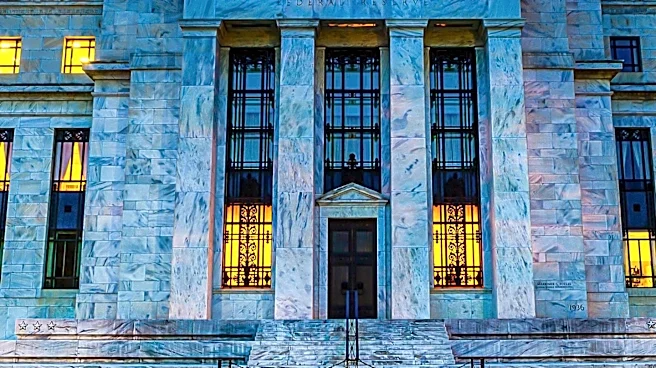
The current situation highlights the complex interplay between geopolitical events and economic policies on commodity markets. The Federal Reserve's interest rate decisions are crucial for investors, as they influence inflation expectations and the attractiveness of non-yielding assets like gold. The ongoing conflict in the Strait of Hormuz has added uncertainty, affecting oil prices and, consequently, inflation rates. In India, the government's import restrictions aim to stabilize the rupee but have inadvertently created a tight silver market, affecting global supply chains. These developments have significant implications for investors and policymakers, as they navigate the challenges of maintaining economic stability amid geopolitical tensions.
What's Next?
Market participants are closely monitoring the Federal Reserve's upcoming decisions on interest rates, as any changes could impact gold and silver prices. Additionally, the resolution of the conflict in the Strait of Hormuz could lead to more stable oil prices, potentially easing inflationary pressures. In India, the continuation of import restrictions may further tighten the silver market, potentially leading to higher premiums. Stakeholders, including investors and policymakers, will need to adapt to these evolving conditions, balancing economic objectives with geopolitical realities.