
What's Happening?
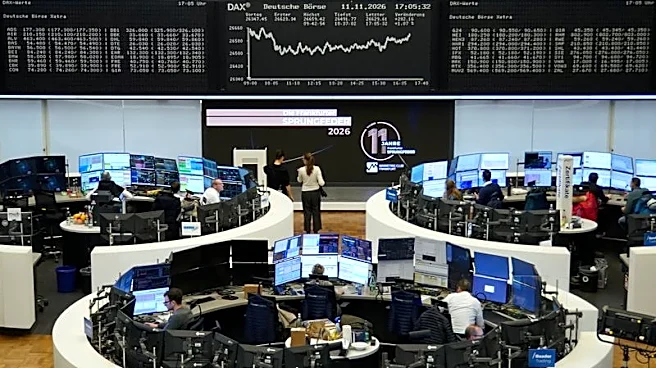
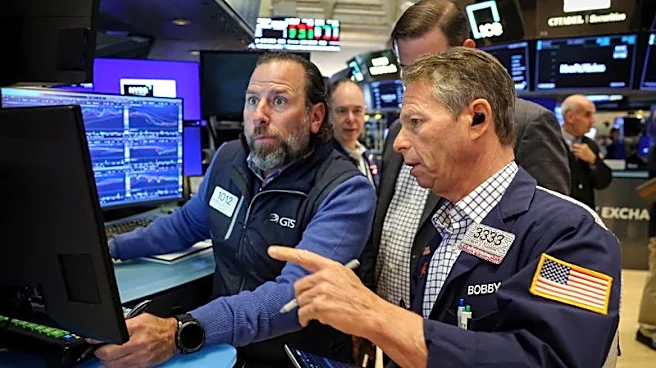
Wall Street's artificial intelligence (AI) trade has undergone a turbulent month, leading investors to carefully reevaluate their AI investments. The volatility highlights the dynamic and sometimes unpredictable
nature of the AI market. This period of instability suggests that while AI continues to be a significant area of interest for investors, the rapid growth and high valuations seen previously are now facing closer scrutiny. The Wall Street Journal article emphasizes the need for a more cautious approach, indicating that the initial euphoria surrounding AI investments may be giving way to a more measured assessment of risk and return. This shift could influence investment strategies across various sectors that rely on AI advancements.
Why It's Important?
The turbulence in Wall Street's AI trade is important because it signals a potential maturation or recalibration within the broader technology investment landscape. For U.S. industries, this could mean a more discerning allocation of capital towards AI ventures, favoring companies with proven business models and sustainable growth over speculative plays. Investors stand to gain from a more rigorous evaluation process, potentially avoiding overvalued assets, while those who invested heavily in highly speculative AI stocks might face losses. This reevaluation could also impact public policy discussions around AI, as market stability often influences regulatory approaches and government funding for technological development. The shift underscores the inherent risks associated with emerging technologies, even those with transformative potential.
What's Next?
In the immediate future, investors are likely to continue scrutinizing AI companies more closely, focusing on fundamentals such as profitability, market share, and tangible product development rather than just growth potential. This could lead to a divergence in performance between well-established AI firms and newer, less proven startups. We might see increased due diligence from venture capitalists and institutional investors before committing significant capital. Furthermore, the market turbulence could prompt some companies to delay or scale back their AI initiatives if funding becomes harder to secure. The coming months will likely reveal whether this turbulence is a temporary correction or the beginning of a more sustained period of caution in AI investments.
Beyond the Headlines
Beyond the immediate market fluctuations, this turbulence in the AI trade could trigger deeper discussions about the ethical and societal implications of AI development. A more cautious investment environment might encourage a greater focus on responsible AI, emphasizing transparency, fairness, and accountability in AI systems. Companies might find it beneficial to highlight their ethical AI frameworks to attract and retain investor confidence. This period could also foster innovation in areas where AI can demonstrate clear, measurable value, rather than simply being a buzzword. Ultimately, the market's reevaluation of AI could lead to a more sustainable and impactful integration of this technology into various aspects of U.S. society and economy.