







What's Happening?
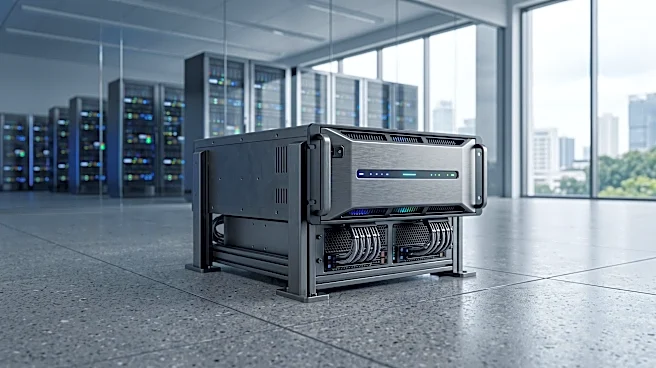
Digi International has launched new models of its IX25 industrial cellular routers, which now support private networks operating on Anterix’s 900 MHz spectrum. These five new models, including LTE, 5G RedCap, and 5G eMBB variants, are designed to provide
secure, reliable, and multi-carrier connectivity for utilities and other industrial operations. The integration with Anterix’s 900 MHz spectrum allows for enhanced signal propagation, enabling broader coverage with less infrastructure, particularly in remote or challenging grid environments. The IX25 routers also incorporate edge computing capabilities, processing data closer to its source to reduce delays and improve decision-making speed. This development aims to address the growing need for dependable and secure communication networks in critical infrastructure sectors, offering dedicated capacity and full operational control that conventional public networks often cannot provide.
Why It's Important?
This advancement is crucial for U.S. utilities facing pressures to upgrade outdated systems, enhance service reliability, and defend against cyber threats. The adoption of private networks with dedicated spectrum, like Anterix's 900 MHz, offers significant advantages over public networks, especially during emergencies when public systems may become overloaded. By enabling utilities to prioritize essential communications and extend connectivity into rural or difficult-to-access locations, the Digi IX25 routers strengthen cybersecurity through customized protections. This is vital for maintaining secure, resilient utility operations as distributed energy resources grow and smart grid initiatives expand. The ability to consolidate older communication systems into a modern broadband architecture also represents a substantial efficiency gain for the industry.
What's Next?
Utilities are expected to increasingly adopt these advanced private networking solutions to enhance their operational resilience and security. The Digi IX25 platform, combined with Digi Remote Manager, will allow for streamlined deployment and real-time monitoring of network performance, enabling quick responses to disruptions and proactive maintenance. Future developments may include software updates to activate n106 capability for 5G RedCap and 5G eMBB models already deployed, further enhancing their performance. The adaptability of the IX25, with support for multiple connectivity options, ensures that utility networks can remain scalable and ready for future innovations, including emerging IoT and smart grid applications. This will likely lead to more efficient grid management and improved service delivery across the U.S.
Beyond the Headlines
The shift towards private cellular networks and edge computing in critical infrastructure highlights a broader trend of decentralization and enhanced security in data processing. This move not only addresses immediate operational needs but also has long-term implications for national security and economic stability. By reducing reliance on public networks, utilities can mitigate risks associated with cyberattacks and widespread outages, ensuring continuous operation of essential services. This technological evolution could set new standards for infrastructure resilience, influencing regulatory frameworks and investment priorities in other critical sectors. The emphasis on local data processing also raises questions about data sovereignty and privacy, potentially leading to new legal and ethical considerations for how sensitive operational data is managed.