






What's Happening?
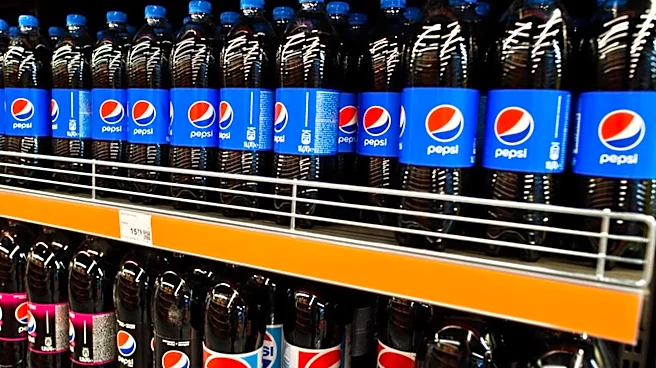
NPR's 'Planet Money' podcast has investigated the creation of new beverage flavors, tracing many of them back to a single laboratory that supplies numerous companies. The podcast's inquiry aims to understand the process behind the proliferation of novel
drink options currently available in the market. This exploration delves into how these flavors are developed and why consumers are seeing such a wide array of choices. The investigation highlights the centralized nature of flavor development within the beverage industry, where a few specialized labs play a significant role in shaping the taste profiles of many different brands. This behind-the-scenes look reveals the intricate process of flavor innovation and its impact on the modern beverage aisle.
Why It's Important?
This investigation by 'Planet Money' is important because it sheds light on the often-unseen mechanisms driving consumer choices in the U.S. beverage market. By revealing that many new flavors originate from a single laboratory, it underscores the potential for a lack of true diversity in taste profiles, despite the appearance of numerous distinct brands. This could influence how consumers perceive product originality and brand differentiation. For beverage companies, understanding this centralized development process can inform strategies for innovation and market positioning. It also raises questions about intellectual property in flavor creation and the competitive landscape for smaller brands that may rely on these same flavor suppliers. The findings could prompt greater transparency in ingredient sourcing and flavor development across the industry.
What's Next?
The insights from 'Planet Money's' investigation could lead to increased consumer awareness regarding the origins of beverage flavors, potentially influencing purchasing habits towards brands that emphasize unique or proprietary flavor development. Beverage companies might respond by highlighting their in-house flavor creation capabilities or by diversifying their partnerships with flavor houses to differentiate their products. Regulators could also take an interest in the concentration of flavor development, examining its implications for market competition and consumer choice. Furthermore, the podcast's findings might inspire further journalistic inquiry into other aspects of the food and beverage industry's supply chain and innovation processes, pushing for greater transparency and understanding of how products reach the market.
Beyond the Headlines
Beyond the immediate implications for the beverage industry, this story touches on broader themes of industrial consolidation and the illusion of choice in consumer markets. The revelation that a single lab influences a vast array of beverage flavors suggests a deeper trend where core components of diverse products are sourced from a limited number of suppliers. This can lead to a homogenization of taste experiences, even as marketing efforts promote variety. Ethically, it raises questions about authenticity and the extent to which consumers are truly offered distinct options. Legally, it could prompt discussions around anti-trust concerns if such concentration limits innovation or fair competition. Culturally, it reflects how modern food systems often prioritize efficiency and scale, sometimes at the expense of genuine diversity and artisanal production.