







What's Happening?
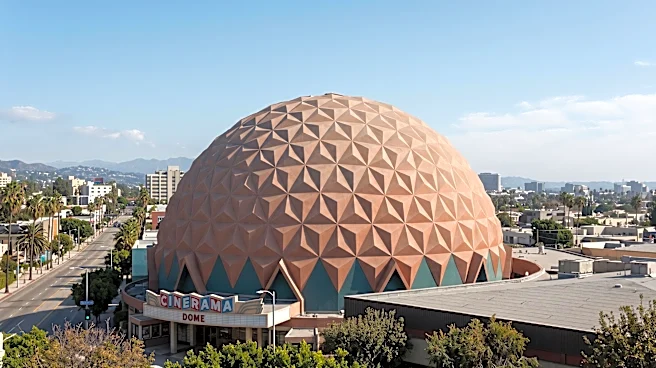
Hollywood's historic Cinerama Dome has revealed new design renderings for its highly anticipated reopening, showcasing a retro-inspired revamp. The plans, released by the Dome and Alamo Drafthouse (which was acquired by Sony in 2024), feature wood-paneled
walls, gold-toned accents, and rust-colored carpeting. This makeover aims to honor the theater's original 1963 interiors, preserving its vintage charm. A key element that will remain unchanged is the iconic red-and-blue Pacific’s Cinerama Theatre sign. The legendary venue, a fixture on Sunset Boulevard, closed in 2020 due to the COVID-19 pandemic, followed by the bankruptcy of Pacific Theatres. The property was subsequently sold by the Forman family, who founded Pacific Theatres, after efforts to find a buyer willing to revive the institution. While the renderings offer a sneak peek, Drafthouse and the Dome have stated that these designs are illustrative and subject to change, meaning the final appearance could differ.
Why It's Important?
The revival and retro-inspired renovation of the Cinerama Dome hold significant cultural and economic importance for Hollywood and the broader entertainment industry. As a landmark venue that has hosted numerous movie premieres and appeared in various productions, its reopening signals a potential resurgence for traditional cinema experiences in an era increasingly dominated by streaming services. The preservation of its original 1963 aesthetic taps into nostalgia, which can attract both long-time moviegoers and new audiences seeking unique cultural experiences. Economically, the reopening could boost local businesses in the surrounding area of Sunset Boulevard, drawing tourists and residents alike. For Sony, through its ownership of Alamo Drafthouse, this investment underscores a commitment to theatrical distribution and exhibition, potentially influencing other studios to support and invest in historic cinema venues. The project also highlights the challenges faced by cultural institutions during the pandemic and the efforts required to bring them back to life.
What's Next?
While new renderings have been released, the Cinerama Dome's final look is still subject to change, as indicated by Drafthouse and the Dome. The next steps will likely involve the commencement or continuation of physical renovations based on the approved designs. Moviegoers and industry professionals will be closely watching for further updates regarding the construction timeline and a definitive reopening date. Once operational, the venue is expected to resume its role as a premier location for film premieres and screenings, potentially attracting major studio events. The success of this revival could serve as a model for other historic theaters facing similar challenges, encouraging investment in their preservation and modernization. The collaboration between the Cinerama Dome and Alamo Drafthouse, under Sony's ownership, will also be a point of interest, as it could influence future strategies for integrating classic cinema experiences with contemporary exhibition models.
Beyond the Headlines
The Cinerama Dome's renovation and reopening transcend a simple business transaction; it represents a deeper cultural narrative about the enduring appeal of communal cinematic experiences in the digital age. In an era where home viewing has become prevalent, the investment in a grand, historic theater like the Cinerama Dome underscores the unique value of the big screen – not just for its technical capabilities, but for its role as a cultural gathering place. The decision to restore its mid-century aesthetic rather than completely modernize it speaks to a broader trend of valuing heritage and authenticity in entertainment venues. This project could also spark conversations about urban preservation and the importance of maintaining architectural landmarks that contribute to a city's identity. Furthermore, the involvement of a major corporation like Sony in preserving such a venue highlights the evolving relationship between large media conglomerates and the physical spaces of film exhibition, suggesting a potential shift towards integrating historical venues into contemporary entertainment portfolios.