





What's Happening?
Cargill Financial Services International, Inc., the financial and risk-management arm of Cargill, has provided a loan of CFA 98.393 billion (approximately €150.0 million) to Gabon. This financing, approved under Gabon's 2026 supplementary finance bill,
is specifically earmarked for the country's Emergency Community Development Programme. This move highlights a less commonly discussed aspect of Cargill's operations, which extends beyond its primary role in agricultural commodities like grains, oilseeds, and animal nutrition. The company's financial activities include structured finance, risk management, and capital provision linked to governments, commodities, and international trade. The same finance bill also approved a separate loan from Deutsche Bank for water infrastructure in Greater Libreville and other urban areas, and additional financing may be negotiated for other infrastructure projects.
Why It's Important?
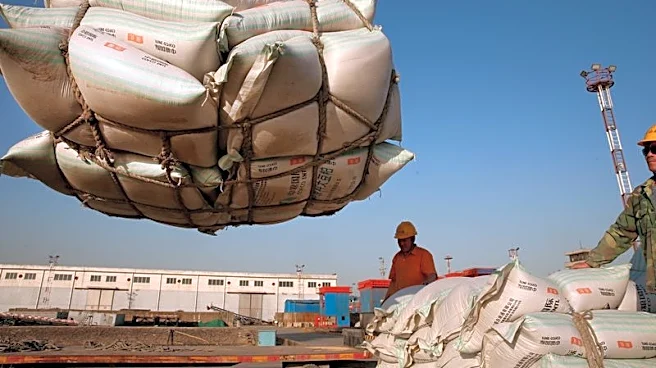
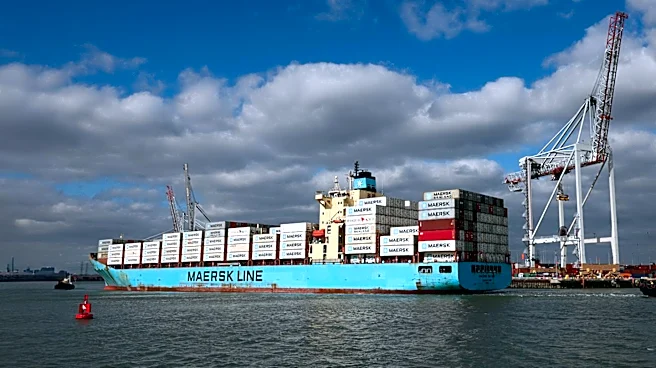
This transaction is important as it demonstrates the expanding role of large commodity groups like Cargill, which are increasingly operating across multiple layers of the global economy. Their influence now spans physical commodities, logistics, processing, risk management, and finance, creating a competitive model that goes beyond traditional buying and selling. For agribusiness, this signifies a shift where major players act as financial intermediaries, extending their reach and impact well beyond the agricultural sector itself. This integrated approach allows companies to leverage their extensive market knowledge and financial resources to engage in large-scale investment and development projects, particularly in emerging markets. The loan to Gabon underscores how global agribusiness can play a significant role in national development programs, influencing infrastructure and community welfare.
What's Next?
The funds provided by Cargill Financial Services International, Inc. will be directed towards Gabon's Emergency Community Development Programme, indicating that the next steps will involve the implementation of various community-focused projects. This could include initiatives related to social infrastructure, economic development, or other programs designed to improve the welfare of Gabonese communities. The involvement of a major global entity like Cargill in such a significant financial undertaking suggests potential for continued engagement in similar projects, both in Gabon and other developing nations. This also sets a precedent for how large commodity groups might further diversify their operations, integrating financial services more deeply into their core business strategies to support broader economic and social objectives.
Beyond the Headlines
The involvement of Cargill's financial arm in providing a substantial loan to a sovereign nation like Gabon reveals a deeper trend in global commerce: the blurring lines between traditional industry sectors and financial services. This integrated model allows large corporations to exert influence not only through their primary products and services but also through their financial capabilities. It raises questions about the evolving nature of corporate power and responsibility, particularly in the context of international development and governance. The ability of agribusiness giants to act as financial intermediaries could lead to more complex relationships between corporations, governments, and international financial institutions, potentially impacting global trade dynamics, risk management strategies, and the allocation of capital for development projects. This also highlights the strategic importance of financial diversification for large commodity groups, enabling them to mitigate risks and capitalize on opportunities across various economic landscapes.