


What's Happening?
A consortium of investors, spearheaded by U.S. billionaire Todd Boehly's asset management firm Eldridge, has reached an agreement to purchase Lukoil's oil and gas assets located outside of Russia. Sources familiar with the deal confirmed to CNBC that
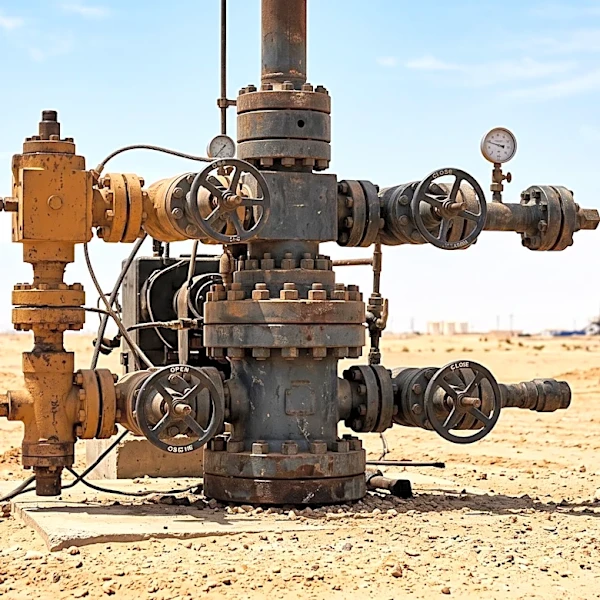
the U.S. International Development Finance Corporation and the UAE-based Catena Investments are also part of this acquisition. The transaction encompasses Lukoil's international refineries and production assets situated in Bulgaria, Romania, Africa, and the Middle East. Additionally, the deal includes retail gas stations operated by Lukoil in the U.S., Europe, and Asia. The U.S. Office of Foreign Assets Control (OFAC) is expected to provide its approval, though final sign-off is still pending. This acquisition is projected to add approximately 350,000 barrels per day of production capacity to the U.S.-led group.
Why It's Important?
This acquisition is significant for several reasons, particularly for the U.S. and Europe. It allows Europe to procure fuel, such as diesel, previously produced by Lukoil, through a U.S.-led entity rather than directly from Russia. This move could bolster European energy security by diversifying supply chains away from Russian influence, aligning with broader Western efforts to reduce reliance on Russian energy. For the U.S., the involvement of a prominent U.S. investor and the U.S. International Development Finance Corporation underscores a strategic interest in reshaping global energy flows and potentially weakening Russia's economic leverage. The inclusion of U.S. retail gas stations in the deal also means a change in ownership for a portion of the domestic fuel distribution network, though the direct impact on U.S. consumers is yet to be seen. The deal's approval by OFAC is crucial, as it signifies U.S. regulatory endorsement of this strategic divestment from a Russian entity.
What's Next?
The immediate next step is the final approval of the deal by the U.S. Office of Foreign Assets Control (OFAC). Once approved, the U.S.-led investor group will assume control of Lukoil's international assets, including refineries, production facilities, and retail gas stations across various continents. This transition will involve integrating these operations into the new ownership structure and potentially rebranding the retail outlets. The agreement's impact on European fuel markets will be closely watched, as it aims to facilitate the purchase of fuel from a non-Russian entity. The new owners will also need to manage the substantial production capacity of 350,000 barrels per day, ensuring smooth operations and supply continuity. The long-term implications for global energy markets and geopolitical dynamics will unfold as the new ownership consolidates its control and implements its operational strategies.
Beyond the Headlines
This transaction represents more than just a corporate acquisition; it's a strategic maneuver in the ongoing geopolitical landscape. By facilitating the sale of Lukoil's non-Russian assets to a U.S.-led consortium, the deal aims to further isolate Russia from global energy markets and reduce its economic influence. It highlights the increasing trend of Western entities seeking to disentangle themselves from Russian-affiliated businesses, even those operating internationally. The involvement of the U.S. International Development Finance Corporation suggests a broader U.S. foreign policy objective to support energy independence and stability for its allies. This could set a precedent for similar divestments in other sectors, potentially leading to a significant restructuring of global supply chains and ownership in critical industries. The deal also underscores the growing importance of asset management firms like Eldridge in executing complex, geopolitically sensitive transactions.