








What's Happening?
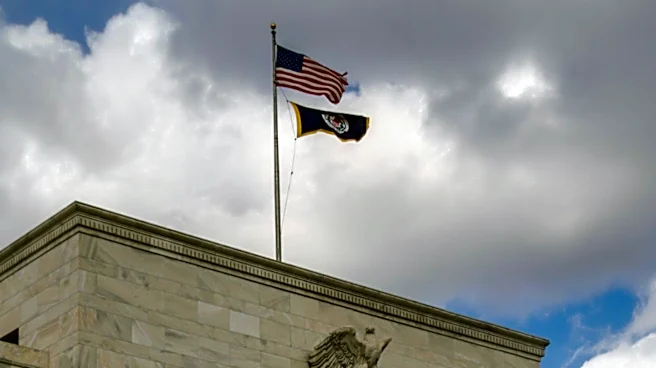
The Federal Reserve's preferred inflation gauge, the Personal Consumption Expenditures (PCE) index, rose to 4.1% in May, marking the highest level in three years. This increase, up from 3.8% in April, has sparked discussions about potential interest rate
hikes. Core PCE, which excludes volatile food and energy prices, also rose to 3.4% from 3.3% in April. The rise in core inflation suggests a broadening of price pressures, despite higher energy prices being a significant factor. Fed officials, including New York Federal Reserve President John Williams, have indicated that inflation is expected to remain elevated through the year but may decrease in the coming quarters. The Federal Reserve is likely to hold rates steady in the short term, with potential rate hikes being considered if inflation does not subside.
Why It's Important?
The rise in inflation is significant as it affects the Federal Reserve's monetary policy decisions, which have broad implications for the U.S. economy. Persistent inflation could lead to increased interest rates, impacting borrowing costs for consumers and businesses. This situation poses challenges for economic growth and could affect consumer spending, a key driver of the U.S. economy. The Federal Reserve's actions in response to inflation will be closely watched by financial markets, as they influence investment decisions and economic forecasts. Additionally, the ongoing geopolitical tensions, such as the conflict in the Middle East, add uncertainty to the economic outlook, potentially affecting global supply chains and energy prices.
What's Next?
The Federal Reserve is expected to monitor inflation trends closely, with the next policy meeting scheduled for July. While a rate hike is not imminent, the central bank may consider such a move if inflationary pressures persist. The resolution of geopolitical tensions, particularly in the Middle East, could stabilize energy prices and help alleviate some inflationary pressures. However, the Fed will need to balance its actions to avoid stifling economic growth while ensuring price stability. Stakeholders, including businesses and consumers, will be keenly observing the Fed's decisions, as these will influence economic conditions and financial markets.