




What's Happening?
Smart lighting systems are being utilized to improve sleep quality by addressing common issues associated with traditional bedroom lighting. Many conventional lighting setups use fixed bulb colors and consistent brightness levels, which can disrupt the
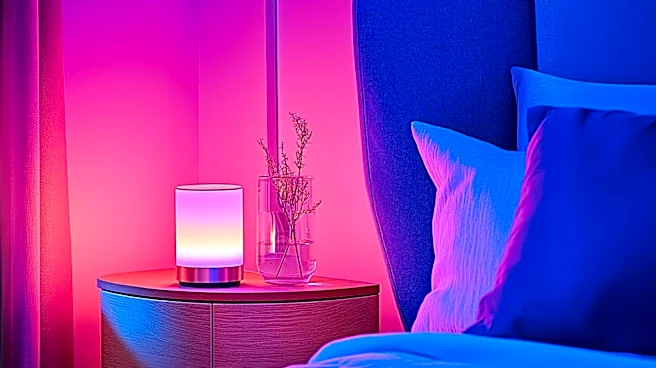
body's natural circadian rhythm. Bright, cool white light, especially after sunset, can suppress melatonin production, making it harder to fall asleep. Smart lighting offers tunable bulbs that can shift color and tint to warmer tones in the evening, limiting melatonin suppression. Additionally, smart systems can create gradual wind-down routines, slowly dimming and warming bedroom lighting over 20 to 30 minutes, providing a transition period for the body to prepare for rest. For waking up, smart alarms can simulate a gradual sunrise, helping the body transition from sleep to wakefulness, which can also be beneficial for individuals experiencing seasonal affective disorder (SAD). These systems can be integrated with other smart home elements, such as thermostats, to create comprehensive sleep-friendly environments.
Why It's Important?
The integration of smart lighting into bedrooms represents a significant advancement in personal wellness technology, directly impacting public health by improving sleep quality. Chronic sleep deprivation is linked to numerous health problems, and by optimizing the light environment, smart lighting can help regulate natural sleep-wake cycles. This technology offers a personalized approach to managing circadian rhythms, which is crucial in an era where artificial light exposure from screens and indoor lighting often interferes with natural biological processes. The ability to customize light color, brightness, and timing allows individuals to create an environment conducive to both winding down and waking up naturally, potentially reducing reliance on sleep aids or harsh alarm clocks. This innovation highlights the growing trend of using technology to enhance daily well-being and addresses a fundamental human need for restorative sleep, with broad implications for productivity, mood, and overall health.
What's Next?
The adoption of smart lighting for sleep improvement is expected to continue growing, with further integration into broader smart home ecosystems. Consumers can anticipate more sophisticated systems that combine lighting with temperature, sound, and even smart blinds to create fully automated, sleep-optimized environments. The market will likely see continued innovation in tunable bulb technology, offering more precise control over light spectrum and intensity. As awareness of circadian wellness increases, demand for these solutions will likely rise, prompting manufacturers to develop more accessible and user-friendly products. Furthermore, research into the long-term health benefits of optimized lighting environments may lead to new recommendations and standards for residential and commercial lighting design. The focus will shift towards seamless, intuitive systems that adapt to individual preferences and biological needs, making healthy sleep more attainable for a wider population.
Beyond the Headlines
Beyond the immediate benefits of improved sleep, the widespread adoption of smart lighting for circadian wellness could foster a deeper understanding and appreciation for the impact of light on human biology. This technology underscores the intricate connection between our environment and our physiological processes, moving beyond simple illumination to a more holistic approach to living spaces. It raises ethical considerations regarding data privacy, as these systems collect information about user habits and preferences. Culturally, it could lead to a re-evaluation of how we design and interact with our indoor environments, prioritizing health and well-being alongside aesthetics and functionality. The long-term shift could see smart lighting becoming a standard feature in homes and workplaces, not just for convenience, but as an essential tool for maintaining optimal health and performance in an increasingly artificial world. This could also spur innovation in related fields, such as personalized health tech and environmental design, creating a more responsive and health-conscious built environment.