



What's Happening?
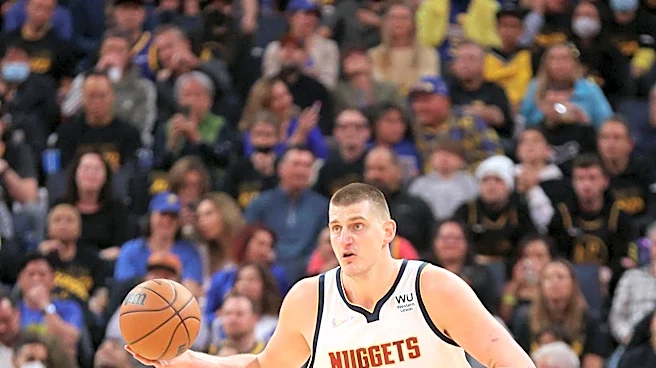
Nikola Jokic, a prominent NBA player, has publicly stated his wish for his children to remember him primarily as a father, not a basketball star. He articulated a desire for people to forget his basketball career after it concludes, indicating a preference
for a normal life away from the spotlight. Jokic also admitted to growing frustration with the constant demands of NBA fame, specifically mentioning that frequent approaches for photos have become exhausting over his more than a decade in the league. This has led him to refuse photo requests during his personal time, a stance he acknowledges might be perceived as 'rude' but is necessary for his well-being. He emphasized that after 11-12 years, he feels 'enough is enough' regarding the constant public attention.
Why It's Important?
Jokic's comments highlight the significant personal toll that sustained fame can take on professional athletes, even those who appear reserved and focused on their sport. His desire for anonymity post-career and his current frustration with fan interactions underscore a broader tension between public figures' professional obligations and their right to privacy. This perspective offers a rare glimpse into the mental and emotional challenges faced by athletes who are constantly in the public eye, potentially influencing how sports organizations and media approach athlete-fan engagement. It also raises questions about the expectations placed on athletes to be perpetually accessible and amiable, contrasting with their personal needs for normalcy and private life. The situation could spark discussions within the sports industry about supporting athletes' mental health and personal boundaries.
What's Next?
Jokic's candid remarks may lead to increased scrutiny of athlete-fan interactions and potentially influence how other public figures manage their personal boundaries. While it's unlikely to drastically alter his professional commitments, his expressed desire for a private life could inform his future decisions regarding public appearances and endorsements. The NBA and individual teams might consider implementing or reinforcing policies that protect players' personal time and mental well-being, possibly through clearer guidelines on fan engagement outside of official events. His comments could also encourage a broader conversation among athletes about the challenges of fame and the importance of setting personal limits, potentially inspiring others to speak out about similar experiences.
Beyond the Headlines
Jokic's statements delve into the ethical and psychological dimensions of celebrity culture, particularly in professional sports. His preference for being remembered as a father over a basketball star reflects a prioritization of personal identity and family values above professional achievements and public recognition. This challenges the conventional narrative of sports heroism, where athletes are often expected to embrace their larger-than-life personas indefinitely. The 'zoo' analogy he used for constant photo requests reveals a dehumanizing aspect of relentless public attention, where individuals are treated as objects of spectacle rather than people with personal lives. This perspective could contribute to a re-evaluation of how society views and interacts with celebrities, fostering a greater appreciation for their humanity and personal space beyond their public roles.