







What's Happening?
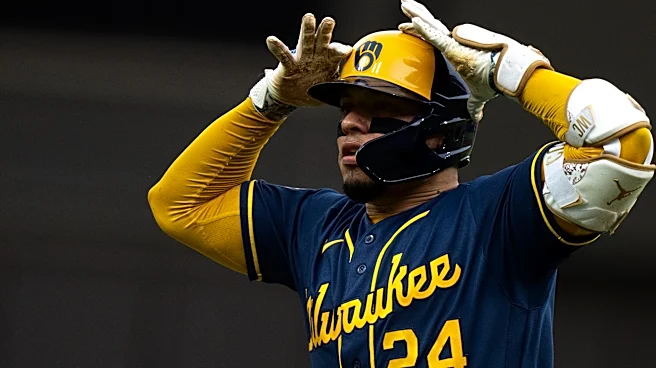
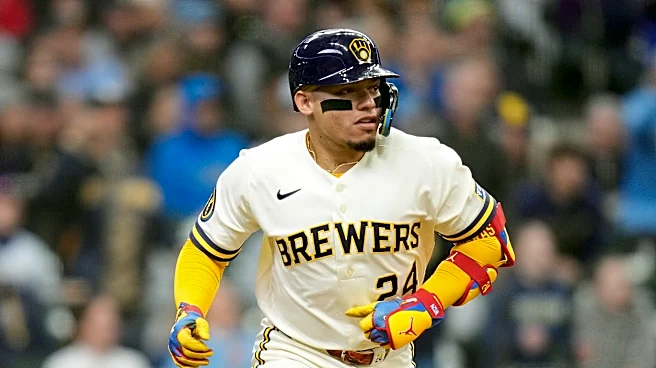
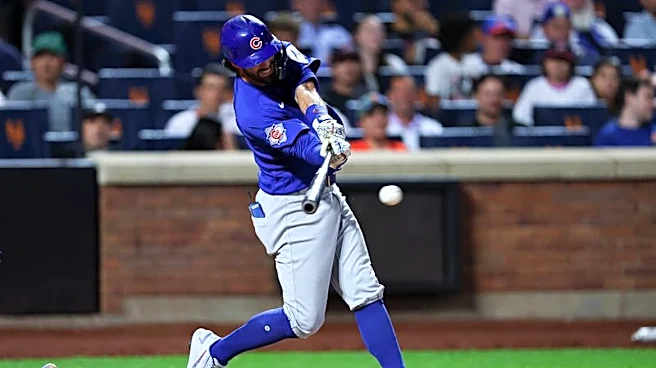
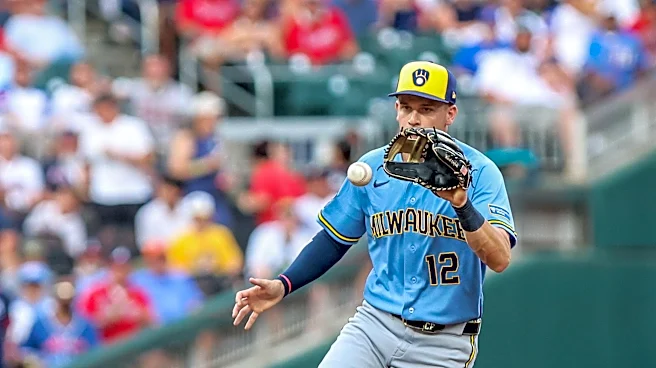
The Milwaukee Brewers and Chicago Cubs game on June 26 will not be broadcast on traditional television. Instead, it will be streamed live as part of Apple TV's 'Friday Night Baseball' package. This marks a significant shift in how fans can access Major
League Baseball games, as the game will only be available through the Apple TV app. New subscribers can access the service for free for the first week, after which a subscription costs $12.99 per month. The game is set to start at 7:45 p.m. ET at American Family Field in Milwaukee, Wisconsin. This move is part of a broader trend where streaming services are increasingly securing exclusive rights to live sports events, potentially changing the landscape of sports broadcasting.
Why It's Important?
The exclusive streaming of the Brewers vs. Cubs game on Apple TV highlights a growing trend in sports broadcasting where digital platforms are becoming primary venues for live sports. This shift could have significant implications for traditional cable networks, which have historically dominated sports broadcasting. For consumers, this change may lead to increased costs as they may need to subscribe to multiple streaming services to access all their desired sports content. Additionally, this move could influence how sports leagues negotiate future broadcasting rights, potentially prioritizing digital platforms over traditional television. The decision by MLB to partner with Apple TV reflects a strategic move to reach a broader, tech-savvy audience and adapt to changing consumer viewing habits.
What's Next?
As streaming services continue to secure exclusive rights to live sports events, traditional broadcasters may need to innovate to retain their audience. This could involve developing their own streaming platforms or forming partnerships with existing digital services. For MLB, the success of this partnership with Apple TV could lead to more games being streamed exclusively on digital platforms in the future. Fans may need to adapt to this new viewing model, potentially leading to changes in how they consume sports content. Additionally, other sports leagues may watch this development closely, considering similar strategies to expand their digital presence and reach new audiences.