




What's Happening?
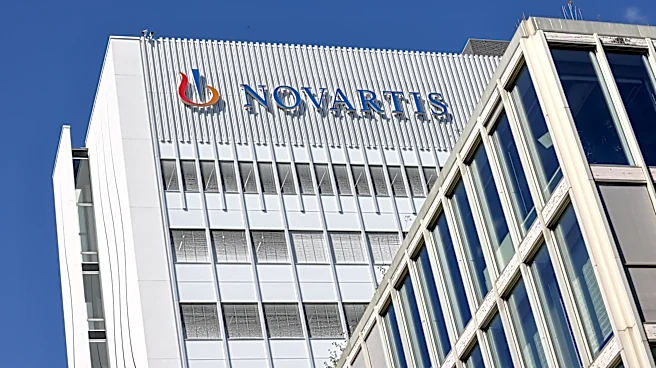
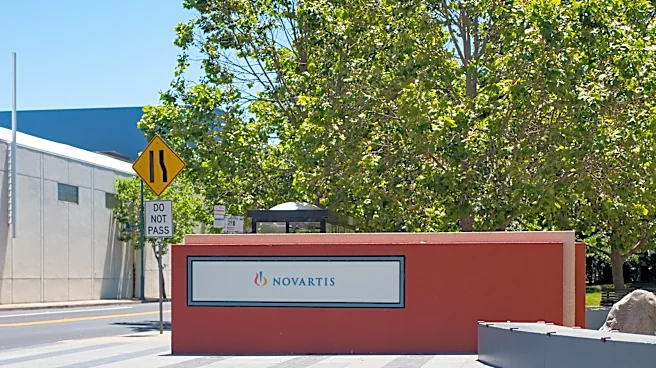
Novartis has projected a more modest average growth rate of mid-single digits through 2031, a slight reduction from previous analyst expectations. This outlook was shared during an investor day where the Swiss pharmaceutical company addressed the impact
of generic competition and the U.S. Inflation Reduction Act (IRA) on key products. CEO Vas Narasimhan noted that Cosentyx, a treatment for immune-mediated inflammatory diseases, is expected to peak in 2027, with IRA-driven price declines starting in 2028 and loss of exclusivity in 2029. Similarly, breast cancer medicine Kisqali will face IRA-driven price declines in 2028. Despite these headwinds, Novartis has hiked sales guidance for Kesimpta to $8 billion and for Scemblix and Leqvio to $5 billion each, banking on its pipeline of over 30 'high-value' assets, including 10 in late-stage development with multi-billion dollar peak sales potential.
Why It's Important?
Novartis's revised growth projections and strategic focus on its pipeline are critical for the U.S. pharmaceutical market. The impact of generic entry and the IRA highlights increasing pressure on drug pricing and market exclusivity, which could affect other pharmaceutical companies operating in the U.S. The company's ability to offset these challenges with new, high-value assets is crucial for its long-term financial health and its capacity to deliver innovative treatments to patients. For U.S. patients, the success of Novartis's pipeline in areas like multiple sclerosis, blood cancer, and cardiovascular health could mean access to new and improved therapies. However, the pricing pressures from the IRA also indicate a shift towards more cost-conscious healthcare policies, which could influence drug development and commercialization strategies across the industry.
What's Next?
Novartis plans to navigate the upcoming patent expiries and pricing pressures by focusing on its robust pipeline, which includes promising assets like remibrutinib, pelabresib, and ianalumab, each with multi-billion dollar potential. The company also anticipates engaging in smaller to mid-sized mergers and acquisitions, particularly for early-stage research, with an expectation that about half of its future revenue will come from external assets. Investors will be closely watching the progress of these pipeline candidates and the execution of M&A strategies to determine if Novartis can achieve its long-term growth targets and maintain its competitive position in the global pharmaceutical landscape. The company's ability to manage R&D costs while delivering on its pipeline will be a key factor in its future success.
Beyond the Headlines
The challenges faced by Novartis, particularly from generic competition and the IRA, reflect a broader trend in the pharmaceutical industry towards increased scrutiny on drug pricing and the need for continuous innovation. This environment compels companies to invest heavily in R&D and strategic partnerships to replenish their product portfolios. The emphasis on 'replacement power' through a strong pipeline underscores the cyclical nature of the pharmaceutical business, where patent cliffs necessitate a constant flow of new, high-value drugs. This dynamic also highlights the tension between pharmaceutical companies' need for profitability to fund innovation and public demands for affordable healthcare, a debate that continues to shape healthcare policy and market dynamics in the U.S. and globally.