




What's Happening?
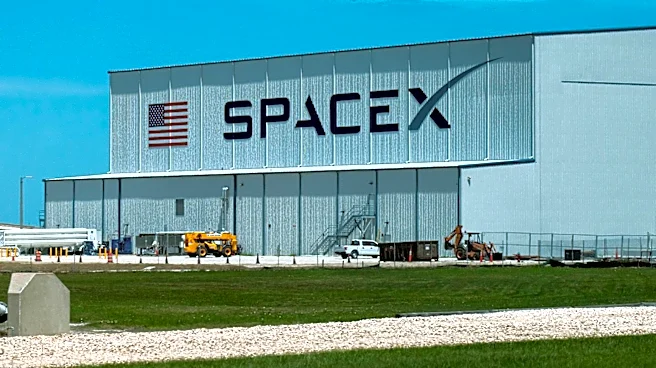
SpaceX has announced that its new Terafab chip manufacturing facility in Grimes County, Texas, will be powered by natural gas plants and large battery arrays, rather than Tesla's solar solutions. This decision marks a significant shift from the company's
previous emphasis on sustainable energy sources. The Terafab plant, which is set to be the largest chip manufacturing facility globally, is located on the site of a former coal-fired power plant. Despite Tesla's involvement in the project and its promotion of solar energy solutions, the decision to use natural gas highlights a departure from the company's earlier commitments to renewable energy. This move is part of a broader pattern, as SpaceX has invested heavily in gas turbines for its data centers, raising environmental concerns from groups like the NAACP and Earthjustice.
Why It's Important?
The decision to power the Terafab plant with natural gas instead of solar energy has significant implications for the tech industry's approach to environmental, social, and governance (ESG) commitments. It suggests a potential shift in priorities from long-term sustainability to immediate operational efficiency and cost-effectiveness. This move could influence other tech companies to reconsider their ESG strategies, potentially slowing the transition to renewable energy sources. The environmental impact of increased natural gas usage, including emissions of nitrogen oxides and formaldehyde, poses health risks to nearby communities, prompting legal challenges from environmental and civil rights organizations. The decision also reflects broader economic incentives, as natural gas may offer a more reliable and cost-effective energy source for large-scale industrial operations.
What's Next?
The decision to use natural gas at the Terafab plant may lead to increased scrutiny from environmental groups and regulatory bodies. Legal challenges, such as those already initiated by the NAACP and Earthjustice, could intensify, potentially affecting the plant's operations. Additionally, this move may prompt discussions within the tech industry about balancing sustainability goals with economic and operational considerations. As energy costs continue to rise, companies may explore hybrid energy solutions that combine renewable and non-renewable sources to optimize efficiency and reduce environmental impact. The outcome of these discussions could shape future energy policies and investment strategies within the tech sector.
Beyond the Headlines
The choice to prioritize natural gas over solar energy at the Terafab plant raises questions about the long-term vision of tech companies regarding sustainability. While natural gas offers immediate benefits in terms of cost and reliability, it contradicts the broader narrative of transitioning to a solar electric economy. This decision may influence public perception of tech companies' commitment to environmental responsibility and could impact investor confidence in ESG-focused initiatives. The situation underscores the complexity of achieving sustainable energy goals in the face of economic pressures and technological limitations.