

What's Happening?
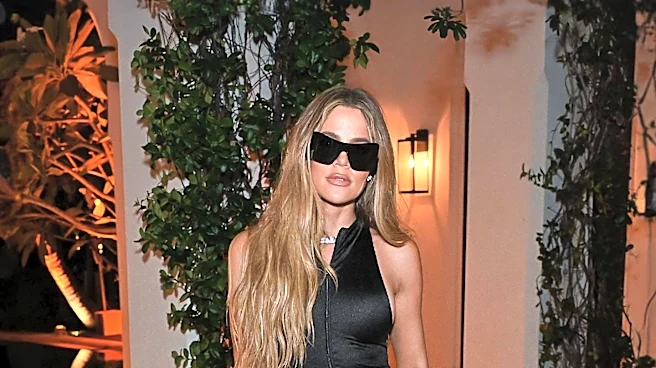
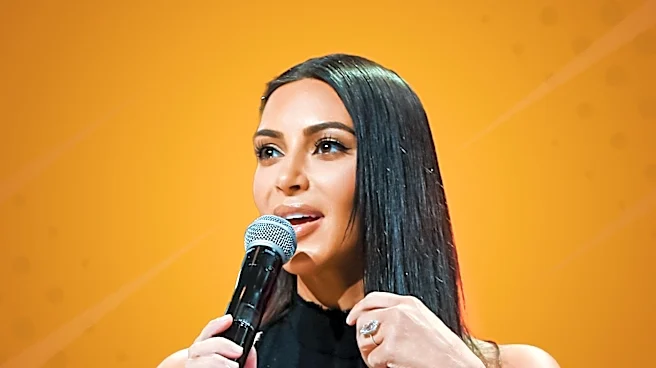
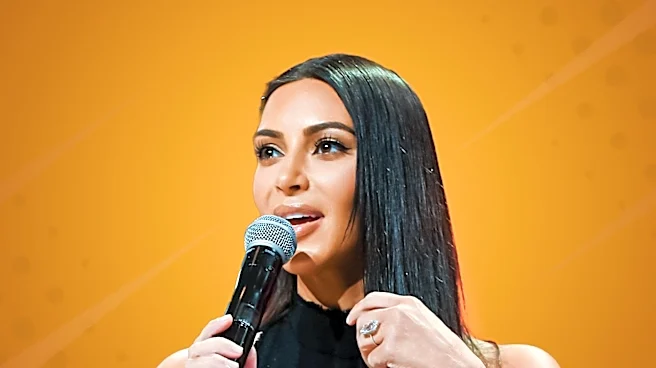
On a recent episode of 'The Kardashians,' Kim Kardashian reiterated her long-held belief that the moon landing never happened, engaging in a discussion with Dr. Kate Biberdorf, a chemistry professor from Notre Dame. Kardashian, supported by Scott Disick
and Khloe Kardashian, expressed skepticism about the historical event, citing common conspiracy theories such as the flag appearing to wave on the moon and discrepancies in astronaut footprints. Dr. Biberdorf, visibly surprised, affirmed the reality of the moon landings, stating that they occurred six times. This is not the first time Kardashian has voiced this theory, having previously done so in 2025, which prompted a response from NASA.
Why It's Important?
Kim Kardashian's public endorsement of the moon landing conspiracy theory, particularly in a widely viewed reality television show, highlights the pervasive nature of misinformation and skepticism towards scientific consensus. Her platform as a global reality star and entrepreneur gives significant reach to these views, potentially influencing a large audience, including those who may be less critical of information presented by celebrities. The interaction with a scientist on the show underscores the challenge of countering such beliefs with factual evidence, as personal conviction often outweighs expert testimony. This incident also reflects a broader societal trend where celebrity opinions can shape public discourse on topics traditionally reserved for scientific or historical experts.
What's Next?
Despite interventions from scientists and even NASA, Kim Kardashian appears unlikely to retract her stance on the moon landing conspiracy theory. Her continued public statements on the matter suggest that this belief is deeply ingrained. The ongoing discussion surrounding her views may further fuel online debates and conspiracy theory communities. For scientific institutions and educators, this situation emphasizes the need for effective science communication strategies to combat misinformation, especially when propagated by influential public figures. It also suggests that similar celebrity-driven discussions on scientific or historical topics may continue to emerge in popular culture.
Beyond the Headlines
This event delves into the complex interplay between celebrity culture, public trust, and scientific literacy. The ease with which a widely debunked theory can gain traction through a celebrity's platform raises questions about critical thinking in the digital age. It also touches upon the psychological aspects of conspiracy theories, where individuals may find comfort or a sense of unique insight in disbelieving official narratives. The incident serves as a case study for how entertainment media can inadvertently, or intentionally, become a battleground for factual accuracy versus popular belief, highlighting the ethical responsibilities of media producers and public figures in shaping public understanding.