




What's Happening?
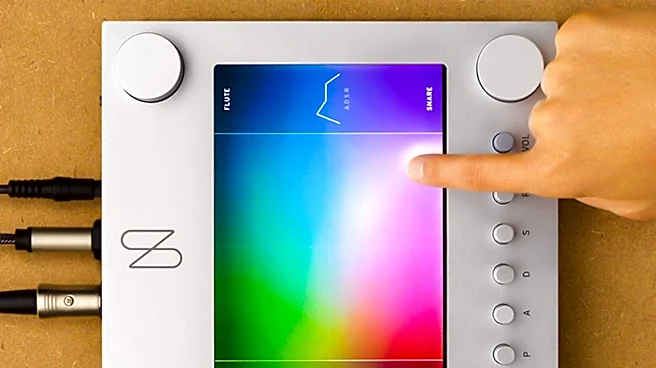
A new concept by designer Abdelrahman Shaapan proposes reviving the Glyph Interface, previously used by Nothing in its smartphones, for a Teenage Engineering synthesizer. The concept, called Mini OP-3, features a semi-transparent rear panel with LED effects
and dynamic graphics that respond to audio inputs. This design aims to integrate the visual language of both brands into a single device, offering a compact synth with a touchscreen lid and various control keys. The concept suggests that the Glyph Interface, which was retired in favor of a dot matrix on Nothing's Phone (3), could be more effectively utilized in musical instruments.
Why It's Important?
The concept highlights the potential for innovative design elements, like the Glyph Interface, to enhance user interaction in musical instruments. By repurposing the interface for a synthesizer, the design offers musicians a visual tool to monitor their audio in real-time, which could improve live performances and studio work. This approach underscores the importance of cross-industry design innovation, where features from one product category can be adapted to enhance another. It also reflects a broader trend in consumer electronics towards creating multifunctional devices that blend aesthetics with practicality.
What's Next?
If the concept gains traction, it could inspire Teenage Engineering and other manufacturers to explore similar design integrations, potentially leading to new product lines that incorporate dynamic visual interfaces. This could also prompt a reevaluation of the Glyph Interface's potential applications beyond smartphones, encouraging further experimentation in product design. The concept may attract interest from musicians and tech enthusiasts, potentially influencing future developments in the music technology industry.
Beyond the Headlines
The revival of the Glyph Interface in a synthesizer context raises questions about the role of visual elements in enhancing user experience across different product categories. It suggests a shift towards more interactive and engaging designs that cater to both functional and aesthetic needs. This trend could lead to a broader acceptance of visual interfaces in various consumer electronics, promoting a more immersive and intuitive user experience. Additionally, the concept reflects a growing interest in personalized and customizable technology, where users can tailor their devices to suit their preferences and creative workflows.