







What's Happening?
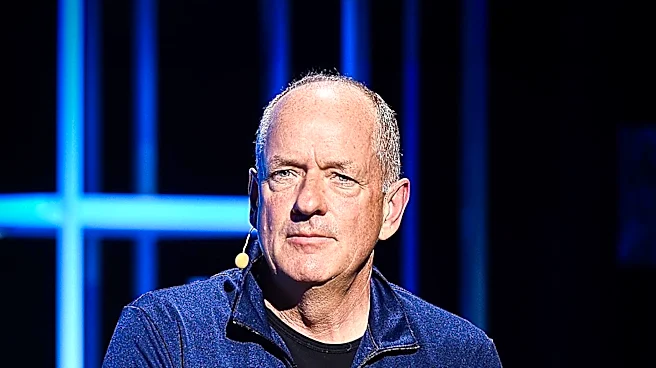
Ed DeVaney, President of CVS Caremark, has identified biosimilars as the most significant near-term opportunity to enhance affordability within pharmacy benefits. In an interview with Fierce Healthcare conference producer Kelly Hogan, DeVaney explained
that the strategy previously used to accelerate generic drug adoption can now be applied to biosimilars. This approach leverages scale and competition to reduce pharmaceutical costs for both payers and members. The discussion also touched upon the potential impact of federal actions on the market and CVS Caremark's commitment to transparent pricing, reporting, and consultative support for plan sponsors as regulatory requirements evolve. Furthermore, DeVaney emphasized the role of artificial intelligence (AI) investments in simplifying customer, member, and colleague interactions, while maintaining a focus on health outcomes and affordability.
Why It's Important?
The focus on biosimilars by a major pharmacy benefit manager like CVS Caremark is critical for the U.S. healthcare system. Biosimilars offer a more affordable alternative to costly biologic drugs, which represent a significant portion of pharmaceutical spending. By promoting their adoption, CVS Caremark aims to drive down overall drug costs, benefiting health plans, employers, and ultimately, patients through lower out-of-pocket expenses. This strategy could increase access to essential medications and alleviate financial burdens. The emphasis on transparency in pricing and reporting is also vital, as it addresses long-standing concerns about the opaque nature of drug pricing and PBM practices. Moreover, the integration of AI is poised to streamline administrative processes, improve patient engagement, and potentially enhance health outcomes by optimizing medication adherence and care coordination. These initiatives collectively aim to reshape the pharmacy benefits landscape, making it more efficient, affordable, and patient-centric.
What's Next?
CVS Caremark is expected to continue its efforts to accelerate biosimilar adoption, potentially through formulary management, educational initiatives, and partnerships with manufacturers. The company will also likely adapt its operations to comply with evolving federal regulations concerning drug pricing and transparency. Further investments in AI technology are anticipated to enhance customer service, personalize member experiences, and optimize internal processes. These technological advancements could lead to more efficient prescription management, improved patient support programs, and better data analytics for identifying cost-saving opportunities. The ongoing focus on affordability, transparency, and member experience will guide CVS Caremark's strategic decisions, influencing its interactions with pharmaceutical companies, healthcare providers, and plan sponsors. The success of these initiatives could set new industry standards and impact how pharmacy benefits are managed across the U.S.
Beyond the Headlines
The strategic shift towards biosimilars and AI by CVS Caremark reflects a broader industry trend driven by the imperative to control healthcare costs and improve efficiency. The biosimilar market, while growing, still faces challenges related to physician and patient acceptance, as well as legal and regulatory hurdles. CVS Caremark's proactive stance could help overcome some of these barriers, fostering a more competitive pharmaceutical market. The increasing reliance on AI in healthcare raises ethical considerations regarding data privacy, algorithmic bias, and the potential impact on human employment. However, if implemented responsibly, AI can revolutionize patient care by providing predictive insights, automating routine tasks, and enabling more personalized treatment plans. This dual focus on cost-saving through biosimilars and operational enhancement through AI underscores a fundamental transformation in how pharmacy benefits are delivered, aiming for a more sustainable and effective healthcare ecosystem in the U.S.