
What's Happening?
Veteran NASCAR insider Kenny Wallace argues that original equipment manufacturers (OEMs) will not allow NASCAR to revert to its 'golden era' style of racing. Wallace's comments follow the 2.4 Hours of LeMullets event at Cleetus McFarland's Freedom Factory,
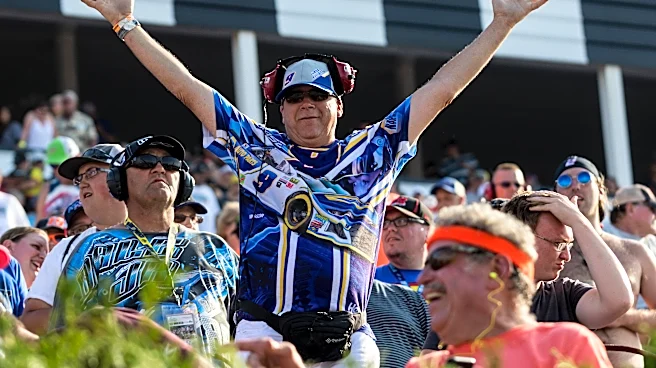
which featured modified Ford Crown Victorias and drew comparisons to NASCAR's past aggressive, physical racing. While fans often express a desire for NASCAR to return to this older style, Wallace emphasizes that manufacturers' business interests are tied to promoting vehicles currently sold to consumers. He points out that the traditional 'win on Sunday, sell on Monday' principle is crucial for OEM involvement, making it impractical to race discontinued car models. Wallace also cited the O'Reilly Auto Parts Series, noting its carbureted engines have little connection to modern road cars, which limits manufacturer engagement. This commercial reality, he states, prevents NASCAR from simply bringing back older car designs, despite fan preferences for that style of racing.
Why It's Important?
This perspective from Kenny Wallace highlights a fundamental tension within NASCAR between fan nostalgia for past racing styles and the commercial realities of modern automotive manufacturing. The sport's reliance on OEM support means that its direction is heavily influenced by manufacturers' marketing strategies, which prioritize showcasing current production vehicles. A shift back to older car models, while potentially popular with a segment of the fanbase, would undermine the 'win on Sunday, sell on Monday' marketing model that justifies manufacturers' significant investment in the sport. This dynamic affects not only the design of race cars but also the overall financial health and future growth of NASCAR, as continued OEM involvement is critical for sponsorship, technological development, and maintaining the sport's professional infrastructure. The challenge lies in balancing fan engagement with the economic imperatives of its key partners.
What's Next?
The ongoing debate about NASCAR's future direction, particularly concerning car design and manufacturer involvement, is likely to continue. Dale Earnhardt Jr. has proposed a compromise for the O'Reilly Auto Parts Series, suggesting the retention of its traditional architecture while introducing newly manufactured, standardized components. This approach aims to preserve the traditional stock-car engineering that fans appreciate without completely ignoring modern industry needs. NASCAR CEO Steve O'Donnell has acknowledged the strong racing in the O'Reilly Series but also raised concerns about the sustainability of its existing parts supply. Any future platform will need to be economical for teams and support the series' growth, while also protecting existing manufacturer relationships and potentially welcoming new partners. The sport faces the task of finding a viable path that satisfies both its passionate fanbase and its crucial commercial stakeholders.
Beyond the Headlines
The discussion surrounding NASCAR's 'golden era' and OEM involvement touches upon broader themes of tradition versus innovation in sports, and the increasing commercialization of professional athletics. The desire among fans for a return to a perceived 'purer' form of racing reflects a common sentiment across many sports where historical authenticity is valued. However, the economic realities of modern sports, particularly those with high technological demands like auto racing, often necessitate compromises that align with corporate interests. This situation also highlights the evolving relationship between sports leagues and their commercial partners, where the lines between entertainment, marketing, and product development become increasingly blurred. The long-term implications could see NASCAR further integrating with automotive industry trends, potentially leading to more advanced, road-relevant technologies in racing, or it could spark a movement to create separate, more traditional racing series that cater specifically to nostalgic fan preferences.