







What's Happening?
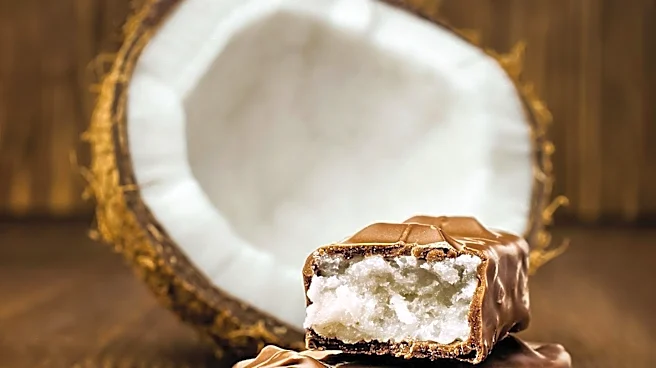
The Coconut Grove candy bar, a vintage chocolate and coconut confection introduced in 1923 by the Curtiss Candy Company, has been resurrected by British retailer Marks & Spencer. The candy bar, which was similar to a Mounds bar but notably used dextrose
instead of pure sugar, was popular in the U.S. until its discontinuation in the 1960s after the Curtiss Candy Company was sold to Standard Brands in 1964. Its disappearance from American shelves remained a mystery. Marks & Spencer decided to bring back the Coconut Grove after a poll revealed that 76% of British consumers are drawn to candy that evokes childhood memories. The resurrected version even features its original retro wrapper, aiming to provide a nostalgic experience for consumers.
Why It's Important?
The resurrection of the Coconut Grove candy bar highlights the significant and enduring power of nostalgia in consumer markets, particularly within the food industry. For U.S. consumers, this event underscores how beloved, discontinued products can still hold cultural relevance and generate interest, even if brought back by an international retailer. It demonstrates a global trend where companies leverage emotional connections to the past to drive sales and create unique market offerings. The decision by Marks & Spencer, based on consumer sentiment, indicates that tapping into childhood memories and familiar tastes is a potent strategy for engaging customers. This could potentially inspire other U.S. or international companies to explore bringing back other 'lost' American food products, impacting product development and marketing strategies in the confectionery and snack sectors.
What's Next?
While the Coconut Grove candy bar has been resurrected by Marks & Spencer in the UK, there is no immediate indication of its return to the U.S. market. However, its revival abroad could spark renewed interest among American consumers and potentially lead to calls for its reintroduction stateside. The success of this nostalgic revival in the UK might serve as a case study for U.S. confectionery companies considering similar ventures with their own discontinued products. For now, U.S. consumers interested in the Coconut Grove would need to source it from Marks & Spencer. The broader trend of nostalgic food revivals is likely to continue, with companies constantly evaluating past products for potential reintroduction based on consumer demand and market trends.
Beyond the Headlines
The story of the Coconut Grove candy bar's disappearance and subsequent resurrection speaks to the transient nature of consumer products and the powerful, often irrational, attachment people form with brands and flavors from their past. The use of dextrose in the original formulation, a detail that might seem minor, points to historical shifts in food science and ingredient preferences. The fact that a British retailer brought it back, citing nostalgia as a primary driver, underscores the universal appeal of childhood memories and comfort foods. This phenomenon extends beyond mere taste; it's about identity, cultural touchstones, and the desire to reconnect with simpler times. The 'mystery' of its discontinuation also highlights how corporate mergers and acquisitions can inadvertently erase beloved products from the market, leaving a void that consumers may remember for decades.