






What's Happening?
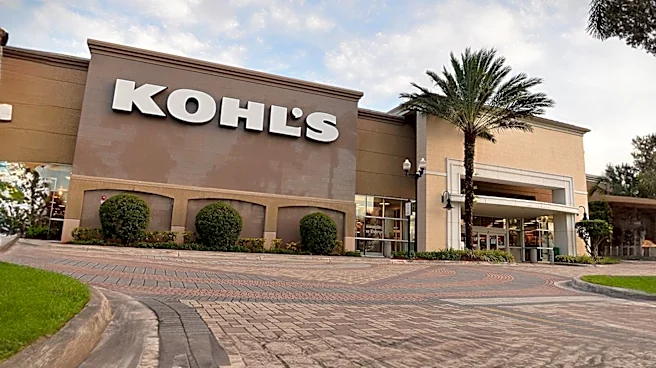
Kohl's Corporation (NYSE:KSS) recently reported a mixed financial performance, with a notable increase in profit despite a decline in sales. The surge in net income was largely attributed to one-time tariff refunds, which significantly boosted the company's
bottom line. While net sales fell and comparable sales experienced a modest decline, operating income rose strongly. This discrepancy between falling sales and rising profit is a central point of discussion. The company's gross margin improved, partly due to these tariff refunds and potentially better inventory management. Kohl's has been actively trying to reduce excess inventory to minimize clearance markdowns and refresh its private brands, which offer higher profit margins. Strategic partnerships, such as the Sephora shops within stores and the expansion of Babies R Us, are key initiatives aimed at driving traffic and utilizing floor space more effectively. However, the effectiveness of these partnerships in generating new visits and sales remains a critical question for the company's long-term strategy.
Why It's Important?
Kohl's financial results underscore the ongoing structural challenges faced by U.S. department stores. The reliance on one-time tariff refunds to boost profit highlights the underlying pressure on sales and the difficulty in achieving organic growth in a competitive retail landscape. The decline in traffic to traditional shopping malls, where many department stores are located, has forced retailers like Kohl's to innovate with loyalty programs, off-mall locations, and strategic partnerships. The 'Sephora effect,' initially seen as a significant traffic driver, and the new Babies R Us partnership, represent attempts to attract new customer segments and maximize store productivity. However, these strategies carry risks, including capital investment requirements and the potential for disappointment if partner brands do not generate sufficient new visits. The market's reaction to Kohl's, including its history of explosive share price moves and its status as a former 'meme-stock' favorite, indicates how sentiment and social media can amplify market volatility, making it challenging to assess the company's true underlying value.
What's Next?
Kohl's is guiding comparable sales to a range from a slight decline to flat for the full fiscal year and has raised its adjusted earnings per share range, with an adjusted operating margin in the mid-single digits. The company has also announced a resumption of share retirements, signaling confidence in its cash generation capabilities. However, this also means capital that could be used for store remodels or debt reduction is being allocated elsewhere. The upcoming holiday season will be a crucial test for Kohl's, as it is the most important period for department stores. The company's historical reliance on coupons and loyalty rewards to drive traffic, which can impact margins, will be under scrutiny. Observers will be watching to see if the improved margins seen in the last release can be sustained during a heavily promotional period. The next quarterly release, expected later this month, will provide further insights into the company's performance without the benefit of tariff refunds and the effectiveness of its holiday strategies. The ongoing consumer caution among middle-income households will continue to influence discretionary spending and, consequently, Kohl's sales.
Beyond the Headlines
The narrative surrounding Kohl's reflects a broader struggle within the U.S. retail industry to adapt to a rapidly changing consumer environment. The company's efforts to balance inventory control, private brand development, and national brand offerings highlight the complex operational decisions retailers face. The ethical implications of relying on promotions and discounts to drive sales, and their potential impact on profit margins and brand perception, are significant. Furthermore, the shift in consumer behavior towards online marketplaces and discount chains poses a fundamental challenge to the traditional department store model. The question of whether a chain that depends heavily on partnerships is building its own identity or merely 'renting' someone else's is a critical long-term consideration. The 'meme-stock' history of Kohl's also points to the evolving dynamics of financial markets, where social media and retail investor sentiment can create significant short-term volatility, sometimes overshadowing fundamental business performance.