
What's Happening?
The Pentagon is reportedly in preliminary discussions with major U.S. automakers, including General Motors (GM) and Ford Motor Co., to explore their potential involvement in mass-producing military drones.
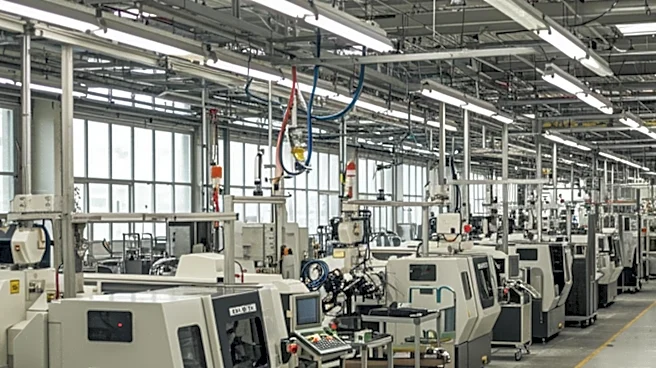
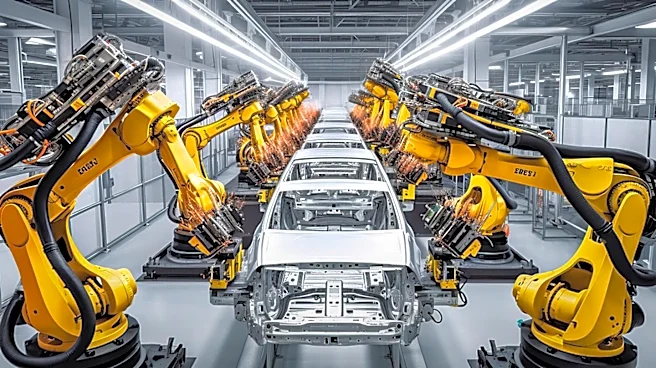
The U.S. military aims to leverage the automotive industry's extensive assembly lines and supply chains to increase the production of critical munitions and equipment, particularly unmanned systems like surveillance and strike drones. Defense officials have met with leaders from Ford, GM, and other manufacturing companies, including Canadian auto parts giant Magna International. One scenario being considered involves GM manufacturing drone motors, which are comparable in size to those found in riding lawn mowers. While the Pentagon anticipates a market for military drones reaching $20 billion to $30 billion annually and is prepared to offer substantial funding, auto executives have reportedly raised concerns about profit margins and the overall business case for entering the weapons supply chain.
Why It's Important?
The Pentagon's engagement with U.S. automakers to scale military drone production signifies a critical shift in defense industrial strategy, highlighting the urgent need to bolster domestic manufacturing capabilities for unmanned systems. This initiative is important because it addresses current shortages of drones, which have become indispensable in modern global conflicts. By tapping into the automotive industry's vast production capacity and established supply chains, the U.S. military aims to overcome the limitations of smaller, less experienced American drone companies. This collaboration could lead to significant economic opportunities for automakers, diversifying their revenue streams and potentially creating new jobs in advanced manufacturing. However, it also presents challenges, as auto executives weigh the profitability and ethical implications of entering the defense sector. The success of these talks could redefine the relationship between the defense industry and commercial manufacturing, impacting national security and industrial policy.
What's Next?
Preliminary talks between the Pentagon and major automakers like GM and Ford are ongoing, with no finalized deals yet. The next steps will likely involve detailed negotiations to address concerns raised by auto executives regarding profit margins and the business case for entering the defense supply chain. The Pentagon will need to present compelling financial incentives and long-term commitments to secure the participation of these large manufacturers. If agreements are reached, the automakers would begin integrating drone component production into their existing facilities or establishing new dedicated lines. This could lead to a significant increase in the domestic supply of military drones and related equipment. The initiative may also encourage other manufacturing companies, both within and outside the auto industry, to explore opportunities in defense production, potentially reshaping the U.S. industrial base for military hardware.
Beyond the Headlines
The Pentagon's push to involve major automakers in drone production carries profound implications beyond immediate military needs, touching upon ethical, economic, and strategic dimensions. Ethically, it raises questions for corporations about their role in the military-industrial complex and the potential for their commercial brands to be associated with warfare. Economically, it could represent a significant re-industrialization effort, shifting manufacturing capabilities towards defense and potentially impacting the automotive sector's focus on consumer markets. Strategically, this move aims to reduce reliance on foreign supply chains and enhance national security through domestic production, but it also highlights the vulnerability of current defense manufacturing to rapid scaling. This initiative could accelerate technological convergence between commercial and military sectors, fostering innovation but also blurring the lines between civilian and defense technologies. The long-term success will depend on navigating complex business models, ethical considerations, and the geopolitical landscape.