
What's Happening?
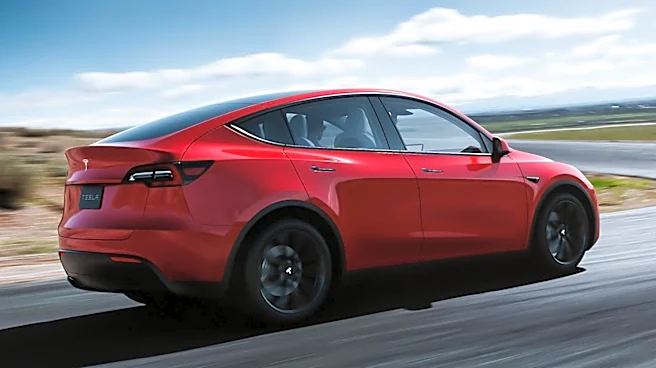
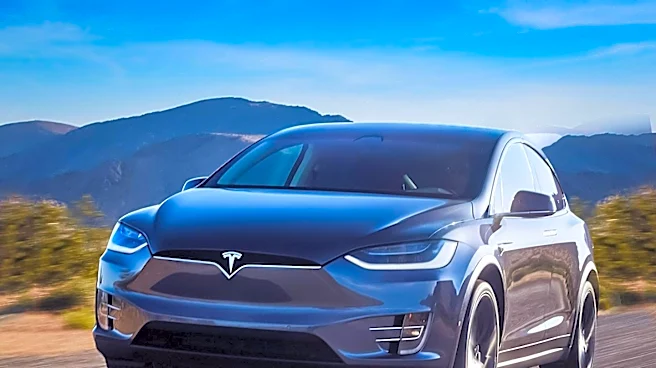
Tesla has initiated the rollout of its Full Self-Driving (Supervised) v15 software to an initial group of U.S. customers. The update, identified as build 15.0.1 within software update 2026.38.6.11, began reaching users on November 21, 2026. According
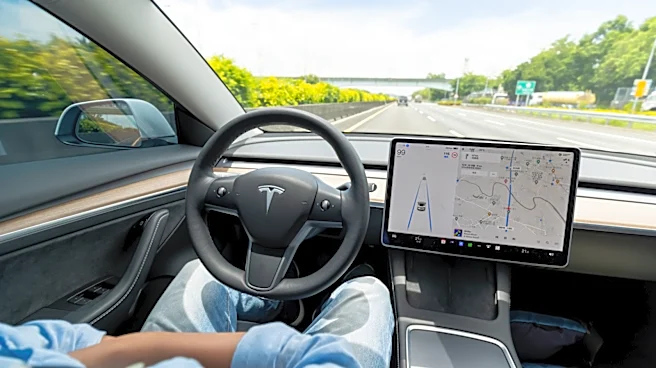
to Tesla, this new version features a completely re-architected end-to-end driving network and includes significant enhancements such as an upgraded vision encoder shared across FSD, the Robotaxi fleet, and the Optimus robot. Key new features include 'Tesla Reality View,' which provides a real-time generative visualization from a virtual camera, improved recognition of road signs, small animals, debris, chains, and potholes, and new functionalities like Speed Camera Slowdown and Bike Rack Mode. Tesla's Vice President of Autopilot and AI Software, Ashok Elluswamy, confirmed the rollout, and the company claims a 25x improvement in handling safety-critical cases compared to v14, though a specific baseline for this claim has not been published.
Why It's Important?
The release of Tesla FSD v15 is significant for the automotive industry and the future of autonomous driving technology in the U.S. The claimed 25x improvement in safety-critical cases, if independently verified, could mark a substantial step forward in the reliability and safety of assisted driving systems. This development could influence regulatory discussions and public perception of self-driving capabilities. For Tesla, a successful rollout and demonstrable safety improvements could bolster its market position and accelerate the adoption of its FSD software. However, the lack of a published baseline for the 25x claim means that independent verification is crucial for establishing the true impact of these improvements. The update's focus on Hardware 4 vehicles also highlights a potential divide, with Hardware 3 owners facing uncertainty regarding future updates, which could affect customer satisfaction and upgrade cycles.
What's Next?
Tesla plans a wider release of FSD v15 in December 2026, coinciding with its Holiday Update. This broader deployment will likely provide more data for independent analysis and user feedback, which will be critical in assessing the software's real-world performance and safety. Regulators, including the NHTSA, are expected to closely monitor the performance of FSD v15, particularly concerning behaviors in school zones and around traffic signals, areas that have previously drawn official scrutiny. The company's decision to relax attention monitoring strictness at higher speeds, while claiming improved safety, may also prompt questions from regulatory bodies. The ongoing debate over the 'good enough' threshold for assisted driving systems will continue, with independent testers likely to conduct side-by-side comparisons of v14 and v15 to provide external validation of Tesla's claims.
Beyond the Headlines
The introduction of 'Tesla Reality View' represents a deeper shift in how Tesla's FSD system communicates its understanding of the driving environment to the user. While designed to make supervision easier and more intuitive, the ethical implication lies in whether a smoother, photorealistic display might inadvertently encourage over-reliance or a false sense of security in drivers, potentially leading to reduced vigilance. The shared vision encoder across FSD, Robotaxi, and Optimus highlights Tesla's strategy of leveraging a single AI backbone for multiple applications, which could lead to rapid advancements but also means that any fundamental flaw in the encoder could propagate across all three products. This integrated approach underscores a long-term vision for AI in robotics and autonomous systems, pushing the boundaries of what a single AI architecture can achieve across diverse domains.