







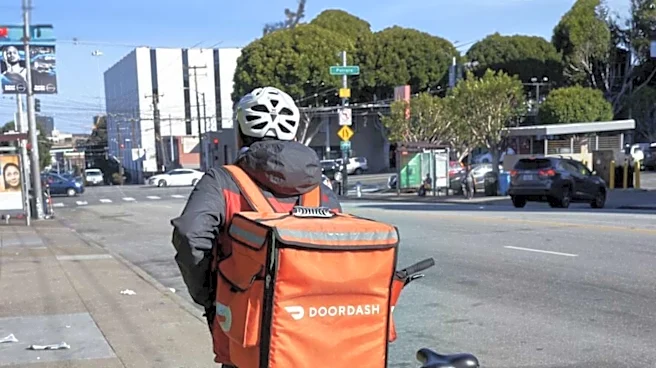


What's Happening?
Gen Z consumers are experiencing 'delivery guilt' due to their frequent use of food delivery apps like DoorDash, Uber Eats, and Grubhub. A Purdue study indicated that two-thirds of consumers used a food-ordering app at least once in 2024, with a FinanceBuzz
survey finding 57% of Americans order takeout or delivery weekly or more. Gen Z, in particular, averages five orders per month, double that of Baby Boomers. This habit, often seen as an 'affordable luxury,' leads to significant spending, with some individuals like 24-year-old nanny Caroline Bauldree estimating $75 per week. Half of Gen Z respondents in the FinanceBuzz survey admitted to feeling embarrassed about their delivery spending, sometimes lying about the amounts to friends and family. Assistant Professor of Marketing Joy Lu at Carnegie Mellon University notes that consumers might be hesitant to discuss their delivery habits due to concerns about contributing to company profits through added fees. The Federal Trade Commission is reportedly considering new rules regarding undisclosed fees from dynamic and surge pricing, while New York City recently fined DoorDash $131.5 million for violations of delivery worker laws.
Why It's Important?
The phenomenon of 'delivery guilt' among Gen Z highlights a complex interplay of convenience, economic pressures, and social perception. The reliance on food delivery apps, while offering convenience, contributes to substantial personal expenses, potentially impacting the financial well-being of a generation already facing rising costs for essentials like rent and car insurance. This trend also sheds light on the business practices of food delivery companies, particularly concerning fee transparency and worker compensation, as evidenced by the FTC's potential new rules and New York City's fine against DoorDash. The embarrassment associated with delivery spending suggests a societal judgment, reminiscent of past criticisms directed at millennials for their spending habits on items like avocado toast. This societal pressure, coupled with the economic realities, could influence Gen Z's future spending behaviors and their relationship with convenience-based services, potentially leading to a re-evaluation of their financial priorities and consumption patterns.
What's Next?
In response to growing concerns, the Federal Trade Commission is reportedly considering new regulations to address undisclosed fees and dynamic pricing practices by food delivery apps. This could lead to increased transparency for consumers regarding the true cost of their orders. Following New York City's significant fine against DoorDash for worker law violations, other municipalities or states might initiate similar investigations or enact stricter regulations to protect delivery workers. Consumers, particularly Gen Z, may begin to actively seek ways to reduce their reliance on these apps due to financial pressures and 'delivery guilt.' This could manifest as a shift towards more home cooking, utilizing grocery delivery services, or opting for restaurant pick-up to avoid delivery fees. Food delivery companies might also face pressure to adjust their pricing models, improve worker conditions, and enhance fee transparency to retain customers and avoid further regulatory scrutiny. The ongoing debate about the affordability of food and the cost of living will likely continue to shape consumer choices and the future landscape of the food delivery industry.
Beyond the Headlines
The 'delivery guilt' experienced by Gen Z extends beyond mere financial concerns, touching upon deeper societal and psychological implications. It reflects a tension between the desire for convenience and the perceived social stigma of 'laziness' or financial irresponsibility, particularly in an economy where younger generations face significant financial hurdles. This guilt can be exacerbated by social media narratives and traditional media criticisms that often blame individual spending habits for broader economic challenges. The reliance on delivery apps also raises questions about the erosion of traditional cooking skills and the impact on local food economies. Furthermore, the ethical considerations surrounding the gig economy, including worker exploitation and the distribution of profits, are brought to the forefront. The collective experience of 'delivery guilt' could foster a greater awareness among Gen Z about conscious consumption, financial literacy, and the broader socio-economic impacts of their choices, potentially leading to a cultural shift towards more sustainable and mindful spending habits.