

What's Happening?
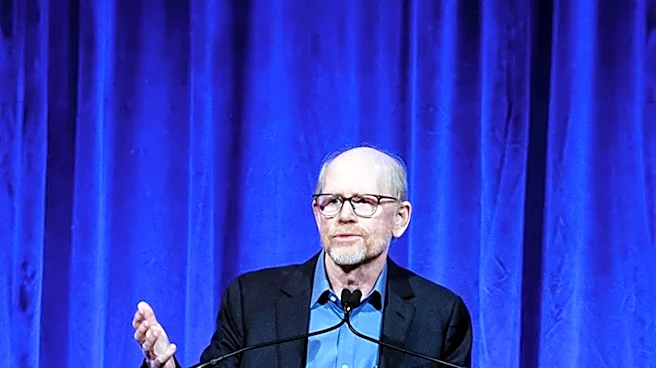
Director Ron Howard recently clarified the circumstances surrounding his decision not to direct 'Star Wars: Episode I – The Phantom Menace'. He revealed that the offer from George Lucas was made during a casual conversation in a car park, not after a formal
script review or careful consideration. Howard described his refusal as a 'knee-jerk reaction,' stating he immediately felt George Lucas should direct the film himself. This casual exchange led to Howard passing up what would become one of the highest-grossing films of its time. 'The Phantom Menace' ultimately earned $924 million, significantly more than Howard's highest-grossing film, 'The Da Vinci Code,' which made $760 million. Howard emphasized that the decision was not a deliberate rejection after deep thought but an instinctive feeling that Lucas was the right person for the job.
Why It's Important?
This anecdote highlights the often-unseen, informal moments that can significantly alter the course of major Hollywood productions and individual careers. For Ron Howard, declining 'The Phantom Menace' meant missing out on directing a film that became a massive box office success and a cultural phenomenon. While Howard has had a highly successful career, this decision represents a pivotal fork in his professional path, demonstrating how personal instincts can override potential financial and critical gains. For the 'Star Wars' franchise, it underscores George Lucas's deep personal connection and perceived ownership of the saga, even when considering other directors. It also offers insight into the creative pressures and expectations surrounding highly anticipated film projects, where the right director is often seen as crucial to a film's success and authenticity.
What's Next?
While this specific event is a look back at a past decision, it continues to shape the narrative around Ron Howard's career and the 'Star Wars' franchise. Howard continues to direct and produce, with upcoming projects like a potential 'How the Grinch Stole Christmas' sequel. The 'Star Wars' universe has expanded significantly under various directors since 'The Phantom Menace,' demonstrating a shift in how the franchise is managed and who is entrusted with its creative direction. This reflection by Howard serves as a reminder of the 'what ifs' in cinematic history and could prompt further discussions among fans and industry insiders about alternative creative paths for major film properties. It also reinforces the idea that even in a highly structured industry, casual conversations can have profound, long-lasting impacts.
Beyond the Headlines
The story delves into the complex interplay between personal relationships, creative vision, and commercial opportunities in the film industry. Howard's 'knee-jerk reaction' to defer to Lucas speaks to a respect for authorship and the unique bond between a creator and their creation. It raises questions about the value of a director's personal connection to a project versus their ability to execute a vision, regardless of origin. Furthermore, the significant box office difference between 'The Phantom Menace' and Howard's 'The Da Vinci Code' illustrates the immense commercial power of established franchises like 'Star Wars.' This incident also subtly touches upon the challenges of directing a prequel to a beloved series, where fan expectations and the original creator's influence can be overwhelming. It's a testament to the idea that sometimes, the most impactful decisions are made not in boardrooms, but in unexpected, informal settings.