





What's Happening?
Georgia Power, the largest utility in Georgia, is planning a significant expansion of its electric grid, aiming to add between 2,000 and 6,000 megawatts of new capacity by 2032 and 2033. The utility is evaluating various energy sources, including natural
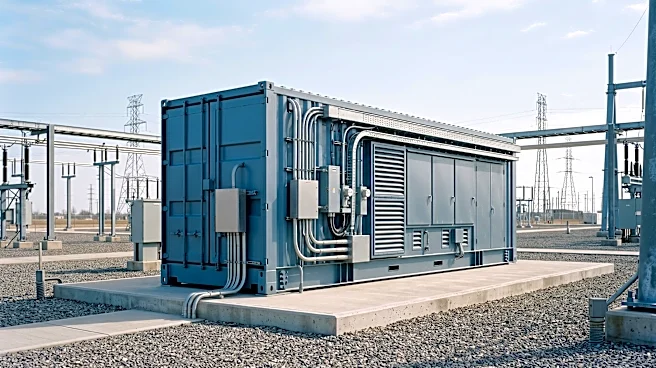
gas and battery storage, to meet future electricity demands. However, a specific calculation known as Effective Load Carrying Capability (ELCC) is drawing scrutiny from renewable energy advocates. The ELCC measures how much reliable capacity a power resource can contribute to the grid. While natural gas typically has an ELCC of 60 to 80 percent, and battery-backed renewables can reach 95 percent, Georgia Power is reportedly using a significantly lower ELCC of just 20 percent for battery storage in its current procurement process. This means a 1,000-megawatt battery project would only count for 200 megawatts towards the utility's capacity needs, compared to 800 megawatts for a natural gas plant of the same size with an 80 percent ELCC. This change in calculation is seen by critics as unfairly disadvantaging battery storage.
Why It's Important?
This obscure utility calculation has significant implications for Georgia's energy future and the broader U.S. energy transition. By assigning a lower ELCC to battery storage, Georgia Power effectively makes renewable energy projects appear more expensive and less valuable compared to natural gas. This could lead to a continued reliance on fossil fuels, locking in millions more tons of annual carbon emissions. Renewable energy advocates argue that utility-scale solar, especially when paired with battery storage, can be competitive or even cheaper than new natural gas generation. If the current ELCC for batteries remains unchanged, the planned grid expansion could be dominated by natural gas, hindering efforts to reduce carbon emissions and transition to cleaner energy sources. This situation highlights the critical role that regulatory frameworks and utility calculations play in shaping energy policy and investment decisions, potentially impacting the growth of the renewable energy sector and the fight against climate change.
What's Next?
Georgia Power is currently reviewing proposals for its 2032-2033 expansion, with the 20 percent ELCC for battery storage still in effect. The utility and state regulators are expected to discuss which projects will move forward early next year. Renewable energy advocates, including the Southern Environmental Law Center and the Advanced Power Alliance, plan to push for a higher ELCC in future expansion planning, with the next round expected to begin in 2028. The impact of the current ELCC calculation will become clearer when Georgia Power's selected projects are submitted for regulatory approval in mid-2027. There is concern that the low ELCC may have already discouraged battery developers from submitting proposals, potentially limiting the diversity of energy sources considered for the expansion.
Beyond the Headlines
The controversy surrounding Georgia Power's ELCC calculation underscores a broader challenge in the energy sector: how to accurately value and integrate variable renewable energy sources into traditional grid planning. The ELCC methodology, while intended to ensure grid reliability, can be manipulated through assumptions and modeling, potentially creating an uneven playing field for different energy technologies. This situation raises questions about transparency in utility planning and the influence of established energy interests on policy decisions. The long-term implications could include slower adoption of renewable energy, increased greenhouse gas emissions, and higher costs for consumers if cheaper, cleaner alternatives are overlooked due to biased calculations. It also highlights the need for robust regulatory oversight to ensure fair competition and alignment with climate goals.