




What's Happening?
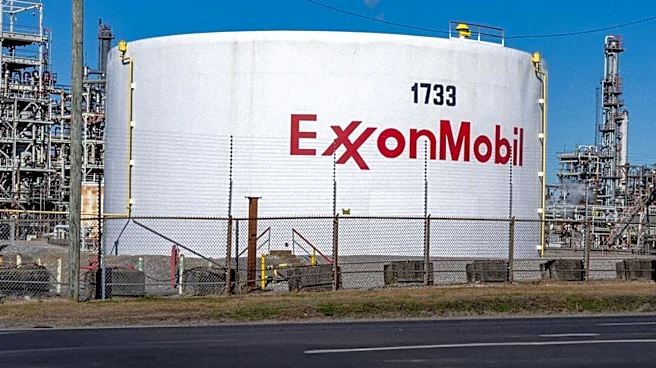
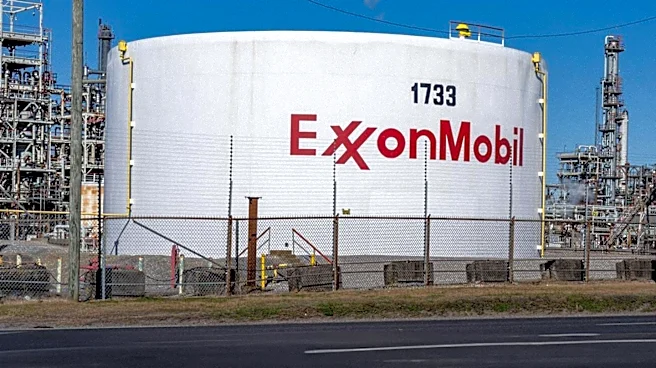
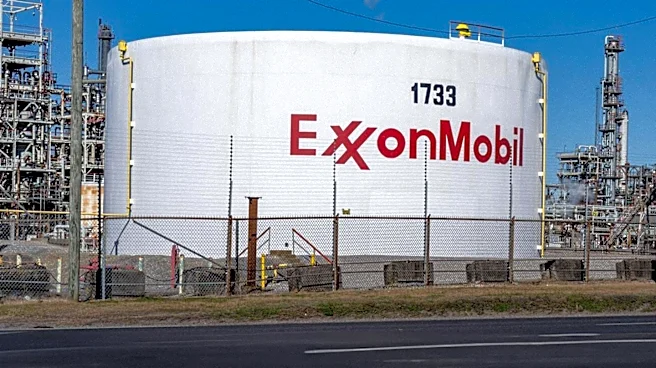
ExxonMobil, a major U.S. integrated energy company, recently reported a doubling of its profits compared to the previous year. This significant financial growth was primarily fueled by surging refining margins, with U.S. Gulf Coast refineries operating
at full utilization. These strong refining results more than compensated for softer crude prices and an entitlement effect in Guyana. In response to its robust performance, the company announced a major new development in Guyana, known as Longtail, and raised its quarterly dividend for the 44th consecutive year. Additionally, ExxonMobil initiated a substantial share repurchase program for the upcoming year, signaling confidence in its financial outlook and commitment to shareholder returns. The company's stock has shown strong relative performance over the past year, though recent trading has experienced volatility influenced by commodity price fluctuations and geopolitical factors.
Why It's Important?
ExxonMobil's strong financial performance and strategic decisions have significant implications for the U.S. energy sector and its investors. The doubled profits, driven by refining margins, highlight the current profitability of downstream operations within the integrated energy model, providing a buffer against fluctuations in crude oil prices. The approval of the Longtail development in Guyana underscores ExxonMobil's commitment to expanding its upstream portfolio and securing future production, which is crucial for long-term energy supply. The consistent dividend increase, now for 44 consecutive years, reinforces its status as a reliable dividend payer, appealing to income-focused investors. The large share repurchase program is expected to boost shareholder value by reducing the number of outstanding shares, potentially increasing earnings per share. This performance also reflects broader trends in the energy market, where refining capacity and efficiency play a critical role in profitability amidst evolving global energy demands and geopolitical landscapes.
What's Next?
Looking ahead, ExxonMobil's performance will likely remain closely tied to global fuel margins, production growth, and its disciplined approach to cash returns. The company's ongoing investments, such as the Longtail development, are expected to contribute to future production volumes and revenue streams. Investors will be monitoring the execution of the share repurchase program and any further dividend adjustments, which could influence stock performance. The energy sector continues to face cyclical swings, regulatory pressures, and geopolitical uncertainties, which will be key factors in ExxonMobil's operational and financial trajectory. The company's ability to navigate these external challenges while maintaining operational efficiency and strategic growth initiatives will be critical for sustaining its positive momentum and delivering continued shareholder value in the evolving energy market.
Beyond the Headlines
ExxonMobil's recent success, particularly in refining, points to a broader resilience within the traditional energy sector, even as global discussions increasingly focus on energy transition. The company's ability to leverage its integrated model, where refining can offset upstream volatility, highlights the strategic advantage of diversified energy giants. This performance also underscores the continued global reliance on hydrocarbons for fuel and chemicals, suggesting that the transition to renewable energy sources will be a gradual process. The substantial capital allocation towards share repurchases and dividends reflects a corporate strategy focused on returning value to shareholders, which can influence investment patterns across the broader market. Furthermore, ExxonMobil's ongoing exploration and development activities in regions like Guyana indicate a long-term commitment to fossil fuel production, raising questions about the balance between energy security, economic returns, and environmental sustainability in the coming decades.