





What's Happening?
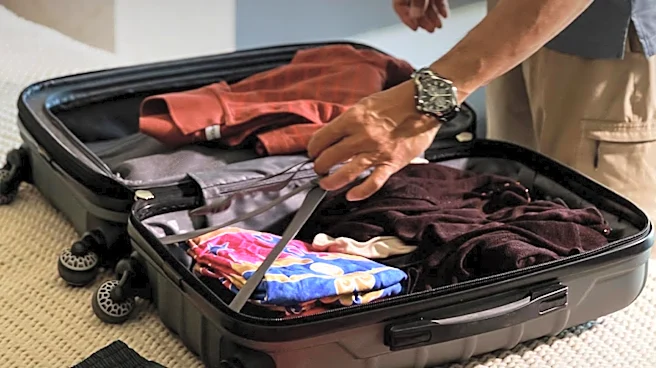
A viral packing hack is gaining traction for its ability to help travelers fit more items into their suitcases, particularly bulky clothing. The method involves utilizing the often-overlooked gaps between the raised rails at the bottom of a suitcase by
filling them with smaller clothing items like T-shirts and scarves. Following this, bulkier garments such as sweaters and jeans are laid flat on top, rather than folded or rolled, to create even layers and minimize volume. This technique aims to eliminate wasted space and potentially allow for more outfits to be packed without requiring a larger bag. While there's no exact percentage for space saved, a video demonstrating the hack showed a medium-to-large suitcase accommodating three bulky sweaters, three pairs of jeans, and several long-sleeve shirts with room to spare, potentially covering three to five days of outfits.
Why It's Important?
This packing strategy is significant for U.S. travelers, especially during peak travel seasons, as it addresses common challenges like baggage fees and limited carry-on space. By maximizing suitcase capacity, individuals can potentially avoid checking an extra bag, saving money on airline fees and reducing the risk of lost luggage. The ability to pack more efficiently also offers greater flexibility for longer trips or for those who prefer to bring a wider variety of clothing options. However, travel expert Samantha Brown notes potential downsides, such as clothes not arriving wrinkle-free and a lack of organization within the suitcase, which might require unpacking everything to find specific items. Travelers must also consider airline weight limits, as fitting more items can quickly lead to an overweight bag fee, negating the benefits of space-saving.
What's Next?
Travelers adopting this viral packing method will need to weigh its benefits against potential drawbacks. While it offers a solution for fitting more into a suitcase, individuals should be prepared for the possibility of wrinkled clothes and a less organized packing system. Future travel preparations may involve strategic placement of items, such as putting blazers at the very top to prevent deep-set wrinkles, as suggested by Samantha Brown. Additionally, travelers should continue to be mindful of airline baggage weight restrictions to avoid unexpected fees. The ongoing popularity of such hacks suggests a continued consumer demand for practical solutions to travel-related challenges, potentially leading to further innovations in packing techniques and travel gear.
Beyond the Headlines
The widespread interest in this packing hack highlights a broader cultural shift towards optimizing personal resources and minimizing costs in travel. In an era where airline fees for checked bags and carry-on restrictions are common, practical solutions that empower travelers to pack more efficiently resonate deeply. This trend also reflects a growing reliance on viral content and social media for practical advice, influencing how individuals approach everyday tasks like packing. The ethical implication lies in balancing the desire for efficiency with the environmental impact of potentially heavier luggage, which could contribute to higher fuel consumption for airlines. Furthermore, the emphasis on fitting more into a bag might inadvertently encourage overpacking, leading to discomfort or additional stress during travel, despite the initial intention of convenience.