




What's Happening?
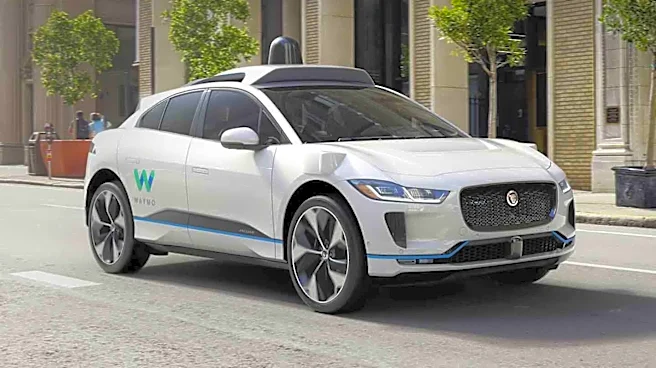
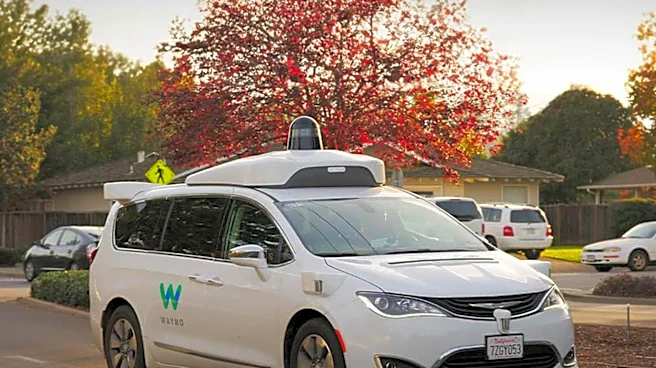
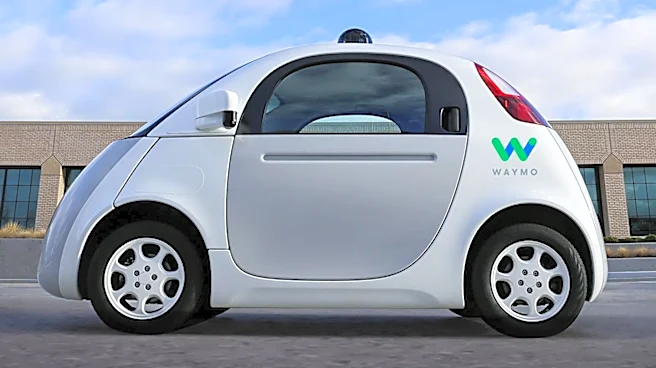
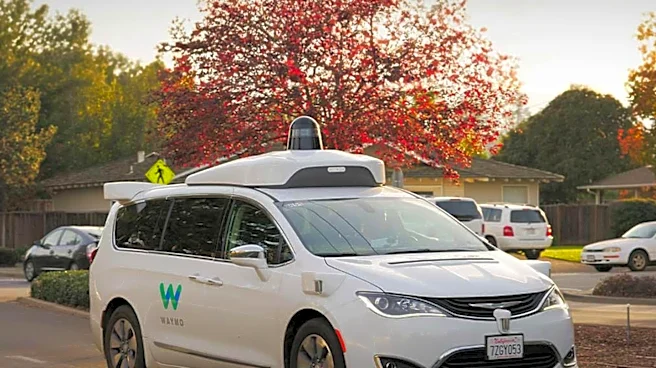
Waymo, the autonomous driving technology company, has paused commercial freeway rides across all its U.S. markets following a ban from the California Department of Motor Vehicles (DMV). This decision comes after a series of incidents, including a driverless
Waymo vehicle attempting to overtake two California Highway Patrol cruisers during a traffic break on Interstate 280. Additionally, between October and November 2026, the company reported 11 instances where its vehicles failed to recognize closed freeway lanes due to construction and drove into restricted areas. This marks the second time in the year that Waymo has been forced to halt freeway operations, with a previous temporary pause earlier in the year after vehicles entered active construction zones in Arizona and California. Despite issuing a software update and gradually resuming freeway operations in late July, the subsequent violations indicate that the previous recall did not effectively resolve the underlying issues.
Why It's Important?
This setback is significant for Waymo and the broader autonomous vehicle industry. For years, the industry anticipated that freeway driving would be less complex than navigating dense city environments. However, Waymo's repeated struggles on interstates, despite its success in urban settings, challenge this assumption. The inability to reliably operate on freeways hinders Waymo's expansion plans, particularly for popular ride-hailing destinations like airports, which often require highway travel. The incidents also raise questions about the effectiveness of Waymo's recall processes and software updates, with experts like Phil Koopman, an emeritus professor at Carnegie Mellon University specializing in autonomous vehicle safety, suggesting that the company is using 'Band-Aids' rather than addressing fundamental perception and reasoning flaws. The California DMV's ban underscores the increasing scrutiny from regulators who are demanding greater transparency and verifiable solutions from autonomous vehicle developers.
What's Next?
Waymo is currently working with the California DMV and other state officials to find a solution and resume freeway operations. The company has stated that its ride-hailing service continues to operate safely on surface streets, serving over half a million trips each week. However, the path to re-establishing freeway operations will likely involve demonstrating to regulators that the underlying issues causing these violations have been definitively resolved, not just temporarily patched. Regulators are expected to demand mandatory public transparency regarding fixes, rather than relying on quiet software updates. The outcome of these discussions and Waymo's ability to address these challenges will be crucial for its future expansion and the public's trust in autonomous driving technology, especially at higher speeds where the consequences of errors are more severe.
Beyond the Headlines
The challenges faced by Waymo on freeways highlight a deeper issue within the development of autonomous vehicles: the difficulty in mastering subtle contextual clues and edge cases. While end-to-end machine learning systems are powerful, they can struggle when familiar objects appear in unfamiliar contexts, such as a stop sign on a school bus versus a stationary post. This suggests that the transition to full autonomy requires more than just accumulating millions of miles; it demands a robust ability to interpret complex and dynamic real-world scenarios. The pressure on executives to deploy 'good enough' fixes versus the safety engineers' desire for thorough solutions also presents an ethical dilemma. This situation could lead to a re-evaluation of regulatory frameworks, potentially pushing for more stringent testing protocols and independent verification of autonomous vehicle safety claims, moving beyond company-issued recalls to ensure public safety.