






What's Happening?
Silver has experienced a significant decline, losing roughly half its value since its peak in January. This drop is part of a broader shakeout in precious metals prices, with silver falling more than a third against gold. The decline began on January 30,
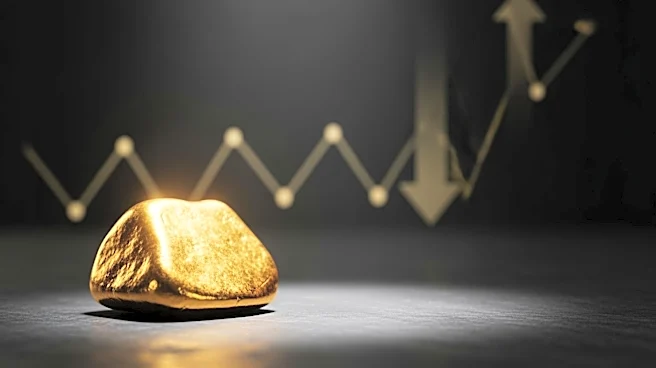
when speculation arose that the Federal Reserve might be less inclined to cut interest rates. Rising fears of inflation, exacerbated by the Iran war, have further pressured silver prices. Gold, on the other hand, has been gaining momentum, breaking above the 200-day moving average. Analysts suggest that gold's rise against silver could continue, with the next target being $70, a key psychological level.
Why It's Important?
The ongoing decline in silver prices highlights the metal's sensitivity to economic shifts and investor sentiment. As an industrial metal, silver is more vulnerable to changes in risk appetite compared to gold, which is often seen as a safe haven. The divergence between gold and silver prices reflects broader market dynamics, including inflation concerns and central bank policies. For investors, this trend underscores the importance of understanding the factors driving precious metals markets and the potential risks and opportunities they present. The performance of these metals can also influence related industries, such as mining and manufacturing.
What's Next?
The future trajectory of silver and gold prices will likely depend on several factors, including Federal Reserve policies, inflation trends, and geopolitical developments. If silver is to mount a comeback, it would need to reverse its current trend and pull gold back below key technical levels. However, if gold continues to rise, it could further widen the gap between the two metals. Investors will be watching for any changes in economic indicators or central bank communications that could impact market sentiment. Additionally, any major macroeconomic events could reignite interest in precious metals as safe-haven assets.