






What's Happening?
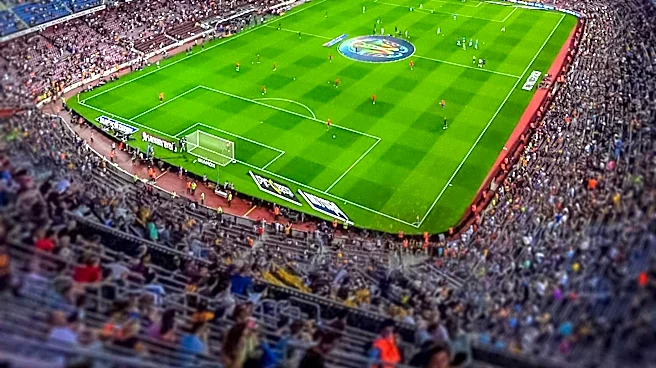
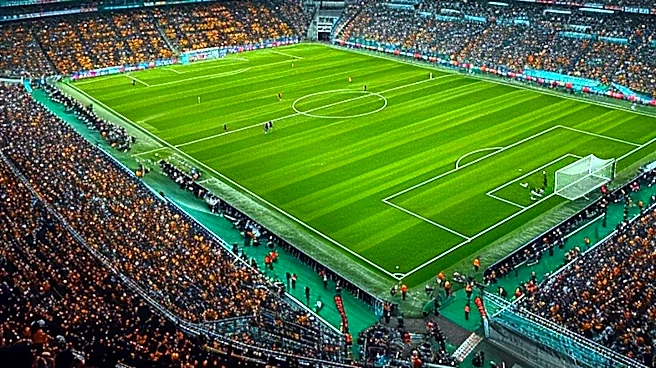
Argentina and Spain are set to face off in the World Cup final at MetLife Stadium, marking the culmination of a tournament that began with 48 teams. Argentina, the reigning World Cup champion, aims to become the first team to win consecutive titles in 64
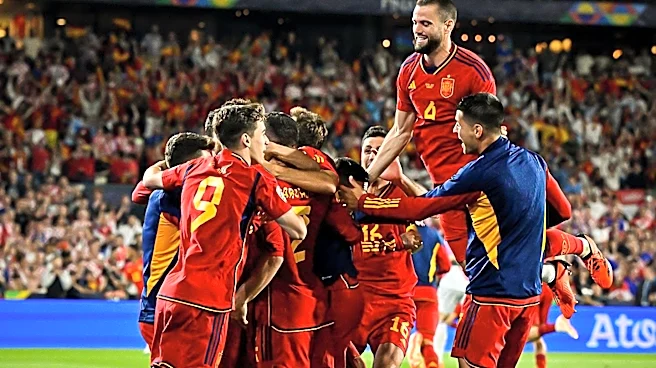
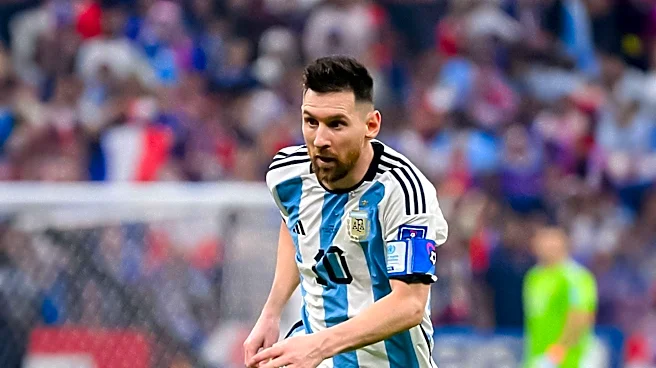
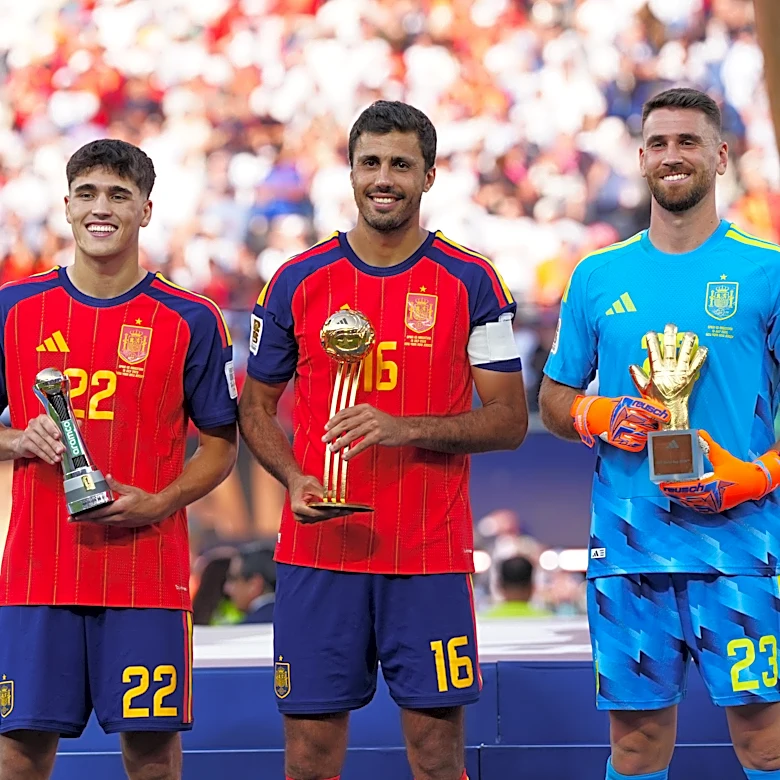
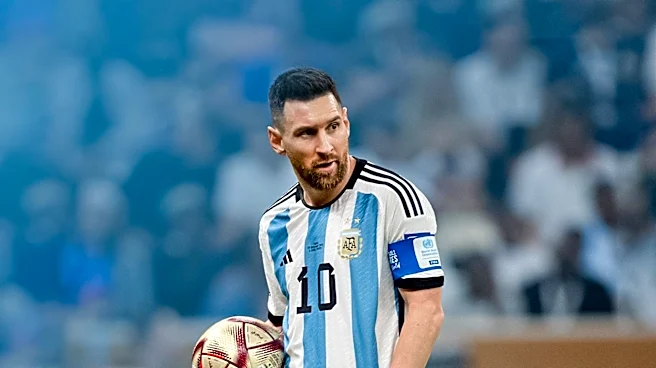
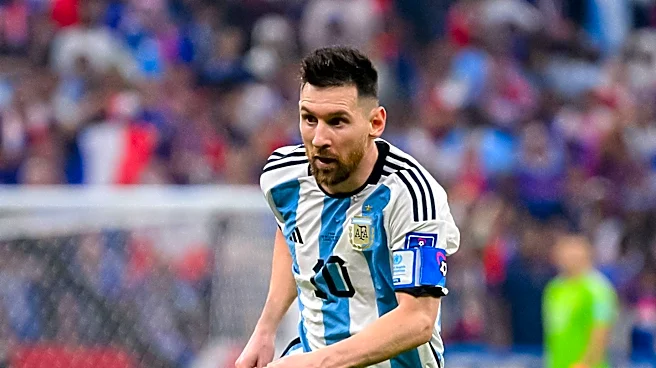
years. Led by Lionel Messi, who has contributed significantly with goals and assists, Argentina is known for its late-game scoring prowess. Spain, the reigning European champion, boasts a strong defensive record, having conceded only one goal throughout the tournament. The match promises to be a clash between Argentina's offensive strength and Spain's defensive resilience.
Why It's Important?
This World Cup final is significant not only for the teams involved but also for the broader implications in international football. A victory for Argentina would solidify Messi's legacy as one of the greatest players in history, potentially earning him a third Golden Ball. For Spain, a win would affirm their status as a dominant force in European and world football. The match also highlights the evolving strategies in football, where both offensive and defensive capabilities are crucial for success. The outcome could influence future tactical approaches in international competitions.
What's Next?
Following the final, the winning team will be celebrated globally, with potential impacts on player transfers and team strategies. The match's outcome could also affect FIFA rankings and future tournament seedings. Additionally, the performance of key players like Messi and Spain's Rodri could influence individual awards and recognitions. The final will be closely watched by fans and analysts, with discussions likely to focus on the tactical decisions and standout performances that defined the match.